by TJ Price
… Felix Platerus hath a most memorable example of a countryman of his, that by chance falling into a pit where frogs and frogs’ spawn was, and a little of that water swallowed, began to suspect that he had likewise swallowed frogs’ spawn, and with that conceit and fear, his phantasy wrought so far, that he verily thought he had young live frogs in his belly, qui vivebant ex alimento suo, that lived by his nourishment, and as so certainly persuaded of it, that for many years following he could not be rectified in his conceit. He studied physic seven years together to cure himself, travelled into Italy, France and Germany to confer with the best physicians about it, and anno 1609, asked his counsel amongst the rest; he told him it was wind, his conceit, etc; but mordicus contradicere, et ore et scriptis probare nitebatur [he obstinately contradicted him, and maintained his view in both speech and writing]: no saying would serve, it was no wind, but real frogs: “and do you not hear them croak?”
— from Robert Burton’s Anatomy of Melancholy (Pt. I, Sec. III, Memb. II, Subs. III)
1: An Ill Wind
I have never enjoyed rapport with the body. I have been known, in fact, to declare that I’d rather be like a brain in a jar, freed of all alimentary or physical concerns, yet still able to cogitate and communicate. If I consider the phrase “one’s body must be as a temple,” it is true I have committed act after act of sacrilege and blasphemy, and now the walls and roof are in ruins. There is leakage and splitting; the floors are warped and bent and creak in protest under the slightest footfall. The entryways of eye and mouth are filmy and occluded, and often possessed of hideous odor. This is a place where no saint would tread: only demons and cavorting devils, splashing in excrement and bile.
For years and years, it has only been by incapacitating the body in some form that I have been able to achieve the state necessary to write. In vino veritas, says one old maxim. Fernando Pessoa, via Bernardo Soares, in his Book of Disquiet, writes “If a man writes well only when he is drunk, then I’ll tell him: Get drunk. And if he says that it’s bad for your liver, I’ll answer: What’s your liver? A dead thing that lives while you live, whereas the poem you write live without while.” (trans. Zenith) Qui vivebant ex alimento suo, indeed. That wedge-shaped slab of meat which occupies such space in one’s trunk—insensate, gray-faced in age, lobed and glossy, which must be retracted up and out of the way should any surgical procedure need to be performed on other organs that lie, quivering, beneath its carmine bulk.
The body, the body, and all of its alien landscapes: names like the zonules of Zinn, the ampulla of Vater, the islets of Langerhans. The pylorus, the jejunum, the sternocleidomastoid! There is a disgusting, organic poetry to these myriad, disparate parts, in the combinatorics of its squishy symphonies and its loathsomely-performed oratorios. Or, as James Joyce—via Leopold Bloom—once eked out at a tram station in Ulysses, due to some bad wine: “Pprrpffrrppffff.” The devils themselves have sport of these airs—see only Canto XXI of Dante’s Inferno, wherein Malebranche makes “a trumpet of his rump,” or peer in close to Hieronymus Bosch’s Garden of Earthly Delights to see how one’s derriére performs embouchure. Read more »








 Donald Trump’s lame duck-hood means two years of danger for the United States. Very little about the second Trump administration has been conventional, and there’s no reason to expect its end will be, either. The final two years could be turbulent, and we have good reason to remain vigilant throughout them. Here’s why.

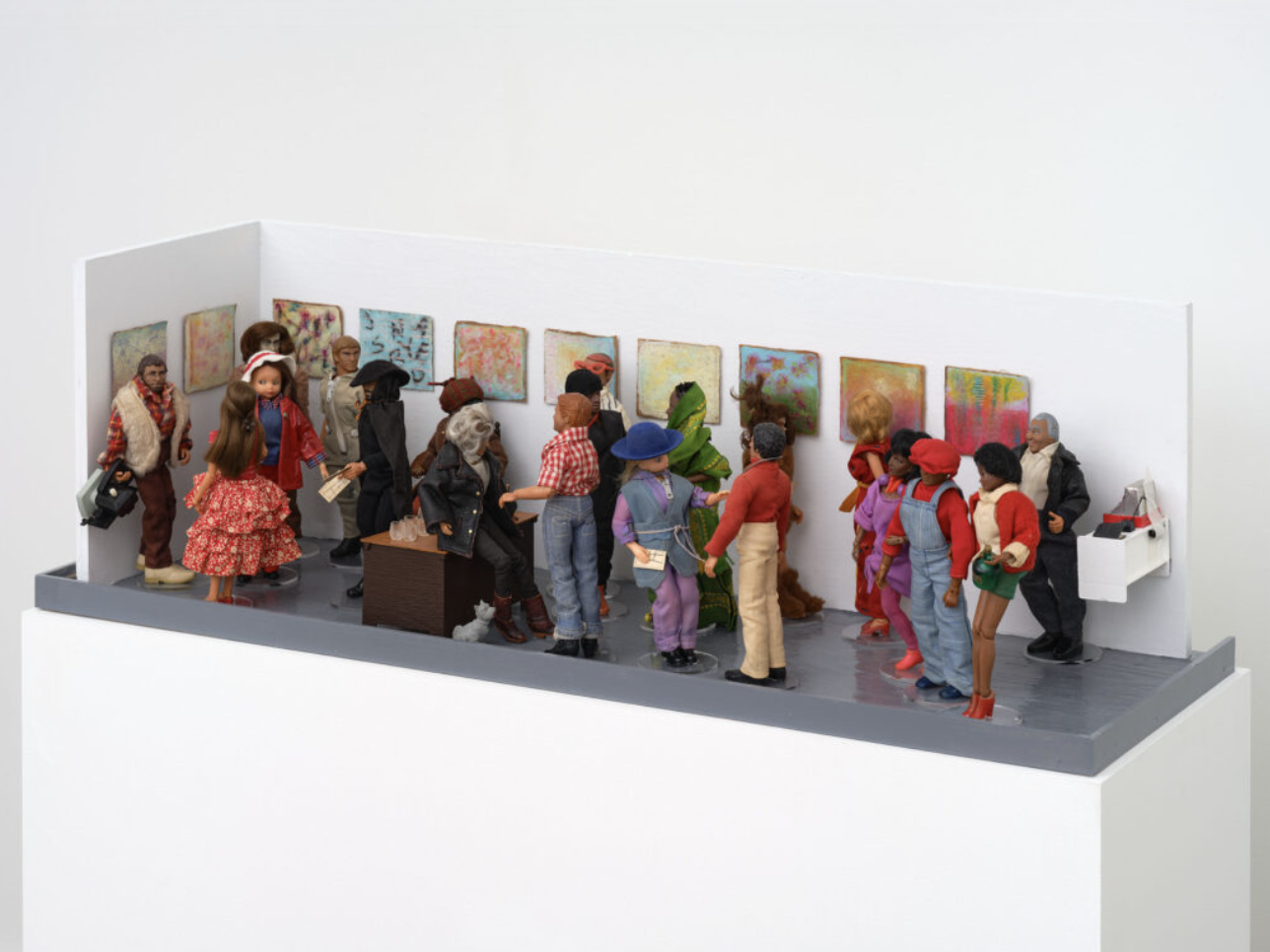 Janet Olivia Henry. Recent Academic Abstractions, 1982