
Featured News

20 Years of Mars Science: PSI’s History with the Mars Reconnaissance Orbiter
Sam Riestenberg November 10, 2026From the first radar observations of Mars’ polar ice to research using decades of orbital data, Planetary Science Institute scientists have helped uncover the red planet’s history and continue to make new discoveries. Read on to see some of their stories. When NASA launched the Mars Reconnaissance Orbiter (MRO) on Aug. 12, 2005, scientists hoped to learn more about Mars’ history, particularly the role of water and whether the planet could have supported life. Equipped
Featured Staff


New Study Reveals That Asteroids Near White Dwarfs Don’t Break Directly into Dust
Sam Riestenberg October 29, 2026PRESS CONFERENCE INFORMATION Jordan Steckloff will present the research during a press conference at the American Astronomical Society’s Division for Planetary Sciences (DPS) annual meeting. Date: Thursday, October 29, 2026Time: 11:45 am PDT (Tentatively scheduled to be fourth presenter)Attendance: Livestream or Register to Attend to ask questions SPOKANE, Wash. — When asteroids travel too close to white dwarfs, the dense remnants of stars that have exhausted their nuclear fuel, powerful gravitational forces can tear them
Featured Staff


PSI Scientists Uncover Hidden Clues to Earth’s Ancient Impacts
Pamela Gay October 23, 2026Earth has far fewer impact craters than airless worlds like our Moon. Because of our thick atmosphere, objects as large as 25 m (depending on composition) burn up as they are heated and as the expanding gas trapped inside blows them apart. However, larger objects, as well as smaller denser ones, do sometimes make it to our planet’s surface. Researchers at PSI study the cratering process on Earth and other worlds across our Solar System.
Featured Staff


Before Astronauts Return to the Moon with Artemis, Scientists Are Preparing for What They Might Find
Sam Riestenberg October 2, 2026When astronauts walk on the Moon as part of NASA’s Artemis program, the science will have started long before they touch down on the lunar surface. Before launch, scientists will have studied images from orbit, mapped the terrain, evaluated potential landing sites, anticipated what astronauts might encounter, and practiced how teams on Earth will respond when the Moon inevitably presents something unexpected. And when the astronauts do step outside, they won’t be exploring alone; there
Featured Staff


PSI-led team selected for NASA PRISM program to explore potential lunar cave
Sam Riestenberg October 1, 2026NASA has selected a Planetary Science Institute-led proposal to investigate whether a potentially large underground cave extends beyond the opening of a lunar pit. Such a cave may one day provide a safe haven for astronauts to escape the radiation and extreme temperature swings present at the lunar surface. The project will be funded through NASA’s Payloads and Research Investigations on the Surface of the Moon (PRISM) program, which sends scientific instruments to the Moon
Featured Staff

Our Mission
The Planetary Science Institute exists to
Our Science
PSI scientists work on advanced studies that cover all of the planets, moons and small bodies in
our solar system, and beyond. Techniques include modeling, mapping, field work, lab work, mission work
and more.

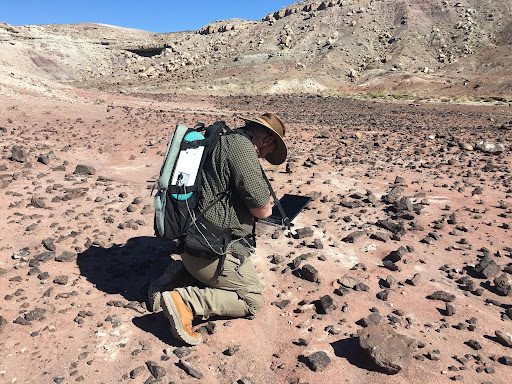

Small Bodies PSI projects, people, and stories on topics including Asteroids, Comets, Dust, Centaurs, Trans-Neptunian Objects & more
Projects
Staff
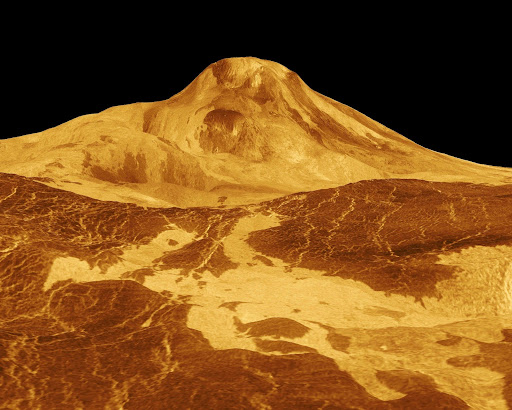
Inner Solar System PSI projects, people, and stories on topics including the Sun, Earth, Venus, Mars, the Moon
Projects
Staff
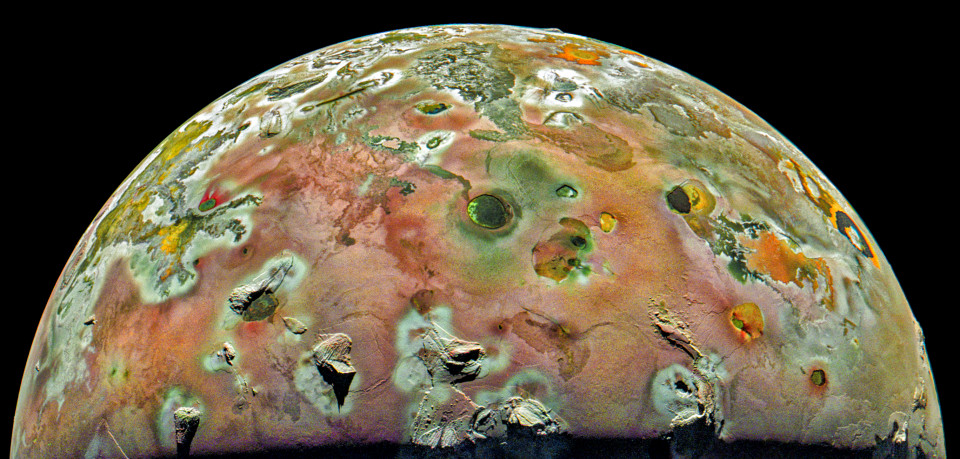
PSI projects, people, and stories on topics including the giant planets, their icy moons and rings, and worlds beyond our Outer Solar System
Projects
Staff
Sci Art

This fascinating piece of artwork depicts familiar constellations and challenges viewers to experience what the star grouping might look like from somewhere other than Earth. To see the installation being created, CLICK HERE. This intriguing sculpture was created by PSI’s Senior Scientist Jamie Molaro.
Sci Art Gallery
Hartmann Art Collection
Art is a critical tool for expressing, exploring, and reflecting on complex ideas. It shines a light on how the process of observing and studying a subject can be both scientific and artistic.
The Hartmann Art Collection at the Planetary Science Institute transports us across space and time to visit strange landscapes in our Solar System and among the stars. The collection spans more than 60 years of that inspired generations of thinkers and dreamers.
These works not only bring landscapes alive, they offer a unique perspective on our understanding of planetary systems and record the history of planetary exploration.
