Meritwashing and How to Stop It
Alex Usher,
HESA,
2026/11/23

Sometimes Alex Usher surprises me and today's cogent discussion of meritwashing is a case in point. The term 'meritwashing' refers to the practice of disguising an advantage granted to some people on the basis of their privilege (wealth, race, caste) through a mechanism design to measure merit, but which implicitly favours the privileged. What surprised me was that Usher agrees we should try to prevent it. But it makes me happy we agree on this. Now of course we probably disagree on how to eliminate meritwashing - he favours better evaluation mechanisms while I would prefer to eliminate the problem of scarcity in the first place. But I can happily debate mechanisms all day comfortable in the knowledge that we're trying to get to the same place.
Web: [Direct Link] [This Post][Share]
Public AI Network
Public AI Network,
2026/11/23

This website is from a coalition building AI as public infrastructure. They write, "societies don't have to just consume the AI technologies shaping their lives—they can create them. We call for a new collective enterprise: building AI infrastructure for the common good. Public investments can unleash a wave of innovation, expanding access to better tools, and in time expanding our collective imagination." There's also a white paper.
Web: [Direct Link] [This Post][Share]
AI made open source fun again
Ben Balter,
2026/11/23
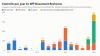
This is my experience as well. "Maintaining open source stops being fun when catching up costs more than ignoring it. AI agents flipped that math on my 15-year-old WordPress plugin." AI may be in other use cases, but for writing software, it converts what used to be chores into something fun again. It does the catching up for you, writes tests, and covers a lot of the mundane work. The designer still does the fun part of deciding what features to add. Via Laura Hilliger.
Web: [Direct Link] [This Post][Share]
Your LinkedIn Network Is About to Get Harder to Navigate
Judi Radice Hays,
LinkedIn,
2026/11/23
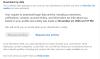
If you don't use LinkedIn you won't care about this and can just move to the next item. But if you do use LinkedIn you should care, because as of December 2026, according to its own download page, "your data download no longer includes your connections' email addresses, current companies, or job titles." You can still get your connections' names and URLs (if any) but this is a significant new limitation on your access to your data. The advice is to download your contact information before that date, but what can you do with it then? I'll watch for suggestions.
Web: [Direct Link] [This Post][Share]
The “Model Library” Approach to Prompting
Mike Caulfield,
The End(s) of Argument,
2026/11/23

This is a terrific article describing what I might characterize as a phase shift in AI model prompting. What Mike Caulfield describes here is an evolution from prompting by giving a model a series of instructions to follow to prompting by giving the model a series of examples of the sort of reasoning that is expected of it. These examples form sort of a mini-model, or as Caulfield describes it, a 'model library'. This in my view ties directly into how we should be instructing people in general. Though we fill people with facts and rules, that's not how people learn. I've characterized the alternative approach in the past by saying that the role of the teacher is to 'model and demonstrate'. That's because people learn from pattern recognition, and this is highly variable in context. You can't give people enough rules to follow, but you can help them recognize typical patterns. That's why worked examples work well for humans, and code libraries help AIs write software.
Web: [Direct Link] [This Post][Share]
There are many ways to read OLDaily; pick whatever works best for you:
- Read in your web browser on this web page, updated weekdays
- Receive a daily or weekly email newsletter by subscribing here
- Subscribe to the RSS feed using your favourite feed reader
- Follow @OLDaily@mastodon.social on Mastodon or elsewhere in the fediverse
- Follow @OLDaily on Bluesky
- Read OLDaily as a LinkedIn Newsletter
- Integrate the open API using the JSON feed
This newsletter is sent only at the request of subscribers. If you would like to unsubscribe, Click here.
Know a friend who might enjoy this newsletter? Feel free to forward OLDaily to your colleagues. If you received this issue from a friend and would like a free subscription of your own, you can join our mailing list. Click here to subscribe.
Copyright 2026 Stephen Downes Contact: stephen@downes.ca
This work is licensed under a Creative Commons License.