
DZone
Thanks for visiting DZone today,
Edit Profile
  • Manage Email Subscriptions
  • How to Post to DZone
  • Article Submission Guidelines
Sign Out View Profile
  • Post an Article
  • Manage My Drafts
Newsletter
Log In / Join
Refcards Trend Reports
Events Video Library
Refcards
Trend Reports

Events

View Events Video Library

Zones

Culture and Methodologies Agile Career Development Methodologies Team Management
Data Engineering AI/ML Big Data Data Databases IoT
Software Design and Architecture Cloud Architecture Containers Integration Microservices Performance Security
Coding Frameworks Java JavaScript Languages Tools
Testing, Deployment, and Maintenance Deployment DevOps and CI/CD Maintenance Monitoring and Observability Testing, Tools, and Frameworks
Partner Zones Build AI Agents That Are Ready for Production
Culture and Methodologies
Agile Career Development Methodologies Team Management
Data Engineering
AI/ML Big Data Data Databases IoT
Software Design and Architecture
Cloud Architecture Containers Integration Microservices Performance Security
Coding
Frameworks Java JavaScript Languages Tools
Testing, Deployment, and Maintenance
Deployment DevOps and CI/CD Maintenance Monitoring and Observability Testing, Tools, and Frameworks
Partner Zones
Build AI Agents That Are Ready for Production

Who owns code nobody has read? Explore accountability in agentic development in this December 3 webinar.

Related

  • Advanced Brain-Computer Interfaces With Java
  • Simplify Java: Reducing Unnecessary Layers and Interfaces [Video]
  • Java 21 SequenceCollection: Unleash the Power of Ordered Collections
  • Projections/DTOs in Spring Data R2DBC

Trending

  • Member Spotlight: Srinivas Chippagiri
  • 5 Mistakes Companies Make When Working With Staff Engineers
  • How to Evaluate Coding Agents With Harbor Framework, Python, Docker
  • Full-Text Search Meets the Graph: Apache Lucene Inside Neo4j

Draft This article hasn't been published, so readers can't see it.

In moderation This article is waiting for review, so readers can't see it yet.

Deleted This article has been deleted, so readers can't see it.

  1. DZone
  2. Coding
  3. Java
  4. Dealing With the Diamond Problem in Java

Dealing With the Diamond Problem in Java

How to solve the issues that arise from interfaces or classes that extend multiple interfaces in Java.

By 
Hari Kiran G
·
Mar. 17, 16 · Tutorial
Post on X (opens in a new tab) Share on LinkedIn (opens in a new tab)
70.6K Views

Join the DZone community Save articles, join the discussion, and download Refcards and Trend Reports with a free account.

Join for free Already a member? Log in

In Java, an interface or class can extend multiple interfaces. For example, here is a class hierarchy from java.nio.channels package:
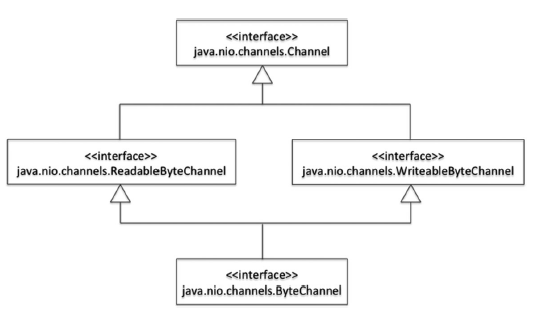
Image title

The base interface is Channel. Two interfaces, ReadableByteChannel and WriteableByteChannel, extend this base interface. Finally, ByteChannel interface extends ReadableByteChannel and WriteableByteChannel.  Notice that the resulting shape of theinheritance hierarchy looks like a “diamond.”

In this case, the base interface Channel does not have any methods. The ReadableByteChannel interface declares read method and the WriteableByteChannel interface declares write method; the ByteChannel interface inherits both read and write methods from these base types. Since these two methods are different, we don’t have a conflict and hence this hierarchy is fine.

But what if we have two method definitions in the base types that have the same signature; which method would the ByteChannel interface inherit? When this problem occurs it is known as “diamond problem.”

Fortunately, rules are available to resolve methods when a derived type inherits method definitions with the same name from different base types. Let us discuss two important scenarios here.

Scenario 1: If two super interfaces define methods with the same signature, the compiler will issue an error. We have to resolve the conflict manually.

//Diamond.java

interface Interface1 {
    default public void foo() { System.out.println("Interface1's foo"); }
}
interface Interface2 {
    default public void foo() { System.out.println("Interface2's foo"); }
}
public class Diamond implements Interface1, Interface2 {
    public static void main(String []args) {
        new Diamond().foo();
    }
}

Error:(9, 8) java: class Diamond inherits unrelated defaults for foo() from types Interface1 and Interface2

In this case, resolve the conflict manually by using the super keyword within the Diamond class to
explicitly mention which method definition to use:

public void foo() { Interface1.super.foo(); }

After this method definition is added in the Diamond class and executed, this program prints: Interface1's foo

Scenario 2: If a base class and a base interface define methods with the same signature, the method definition in the class is used and the interface definition is ignored.

class BaseClass {
    public void foo() { System.out.println("BaseClass's foo"); }
}
interface BaseInterface {
    default public void foo() { System.out.println("BaseInterface's foo"); }
}
public class Diamond extends BaseClass implements BaseInterface {
    public static void main(String []args) {
        new Diamond().foo();
    }
}

No compiler error in this case: the compiler resolves to the definition in the class and the interface definition is ignored. This program prints “Base foo”. This can be considered as “class wins” rule. This rule helps maintain compatibility with versions prior to Java 8. How? When a new default method is added in an interface, it may happen to have the same signature as a method defined in a base class. By resolving the conflict by “class wins” rule, the method from the base class will always be selected.

Java (programming language) Interface (computing)

Published at DZone with permission of Hari Kiran G. See the original article here.

Opinions expressed by DZone contributors are their own.

Related

  • Advanced Brain-Computer Interfaces With Java
  • Simplify Java: Reducing Unnecessary Layers and Interfaces [Video]
  • Java 21 SequenceCollection: Unleash the Power of Ordered Collections
  • Projections/DTOs in Spring Data R2DBC

Partner Resources

Ă—

Comments

Loading comments

The comments didn't load

Please try again in a moment.

Likes

Loading

The next likes didn't load. Please try again.

The likes didn't load

Please try again in a moment.

See who liked this

Log in or join DZone for free to see who liked this article.

Log in Join for free
  • 🔥 Breaking News: articles/dealing with diamond problem in java - Fox News Update
  • 🔥 Breaking News: articles/dealing with diamond problem in java - Fox News Update
  • 🔥 Breaking News: articles/dealing with diamond problem in java - Fox News Update

ABOUT US

  • About DZone
  • Support and feedback
  • Community research

ADVERTISE

  • Advertise with DZone

CONTRIBUTE ON DZONE

  • Article Submission Guidelines
  • Become a Contributor
  • Core Program
  • Visit the Writers' Zone

LEGAL

  • Terms of Service
  • Privacy Policy

CONTACT US

  • 3343 Perimeter Hill Drive
  • Suite 215
  • Nashville, TN 37211
  • [email protected]

Let's be friends:

  • 🔥 Breaking News: articles/dealing with diamond problem in java - Fox News Update
  • 🔥 Breaking News: articles/dealing with diamond problem in java - Fox News Update
  • 🔥 Breaking News: articles/dealing with diamond problem in java - Fox News Update