Bernoulli Naive Bayes, Explained: A Visual Guide with Code Examples for Beginners
Unlocking predictive power through Yes/No probability
CLASSIFICATION ALGORITHM
⛳️ More CLASSIFICATION ALGORITHM, explained: · [Dummy Classifier](https://towardsdatascience.com/dummy-classifier-explained-a-visual-guide-with-code-examples-for-beginners-009ff95fc86e) · [K Nearest Neighbor Classifier](https://towardsdatascience.com/k-nearest-neighbor-classifier-explained-a-visual-guide-with-code-examples-for-beginners-a3d85cad00e1) ▶ [Bernoulli Naive Bayes](https://towardsdatascience.com/bernoulli-naive-bayes-explained-a-visual-guide-with-code-examples-for-beginners-aec39771ddd6) · [Gaussian Naive Bayes](https://towardsdatascience.com/gaussian-naive-bayes-explained-a-visual-guide-with-code-examples-for-beginners-04949cef383c) · [Decision Tree Classifier](https://towardsdatascience.com/decision-tree-classifier-explained-a-visual-guide-with-code-examples-for-beginners-7c863f06a71e) · [Logistic Regression](https://towardsdatascience.com/logistic-regression-explained-a-visual-guide-with-code-examples-for-beginners-81baf5871505) · [Support Vector Classifier](https://towardsdatascience.com/support-vector-classifier-explained-a-visual-guide-with-mini-2d-dataset-62e831e7b9e9) · [Multilayer Perceptron](https://towardsdatascience.com/multilayer-perceptron-explained-a-visual-guide-with-mini-2d-dataset-0ae8100c5d1c)
Unlike the baseline approach of dummy classifiers or the similarity-based reasoning of KNN, Naive Bayes leverages probability theory. It combines the individual probabilities of each "clue" (or feature) to make a final prediction. This straightforward yet powerful method has proven invaluable in various machine learning applications.

Definition
Naive Bayes is a machine learning algorithm that uses probability to classify data. It's based on Bayes' Theorem, a formula for calculating conditional probabilities. The "naive" part refers to its key assumption: it treats all features as independent of each other, even when they might not be in reality. This simplification, while often unrealistic, greatly reduces computational complexity and works well in many practical scenarios.
Main Types of Naive Bayes Classifier
There are three main types of Naive Bayes classifiers. The key difference between these types lies in the assumption they make about the distribution of features:
Bernoulli Naive Bayes: Suited for binary/boolean features. It assumes each feature is a binary-valued (0/1) variable.
Multinomial Naive Bayes: Typically used for discrete counts. It's often used in text classification, where features might be word counts.
Gaussian Naive Bayes: Assumes that continuous features follow a normal distribution.
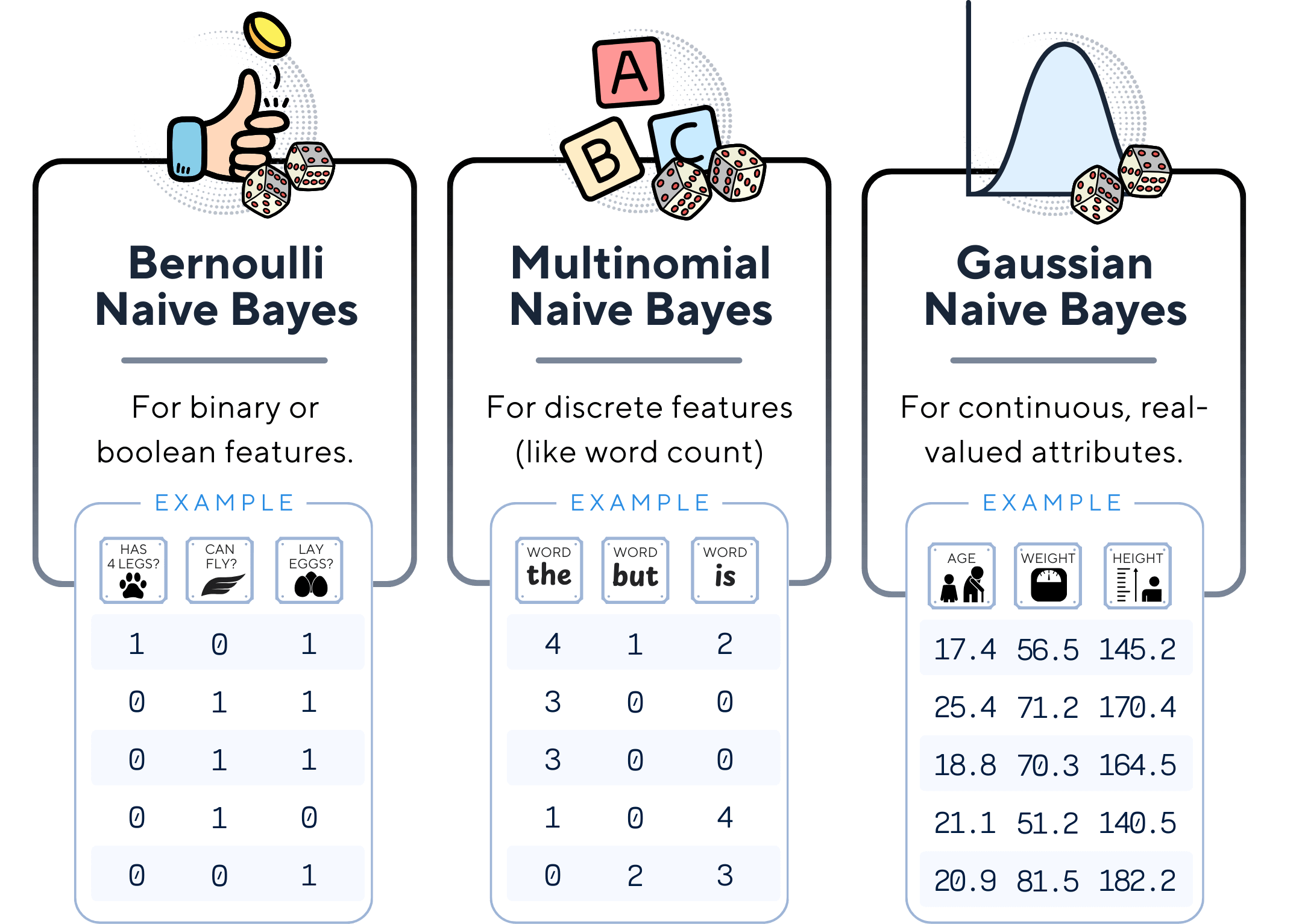
It is a good start to focus on the simplest one which is Bernoulli NB. The "Bernoulli" in its name comes from the assumption that each feature is binary-valued.
Dataset Used
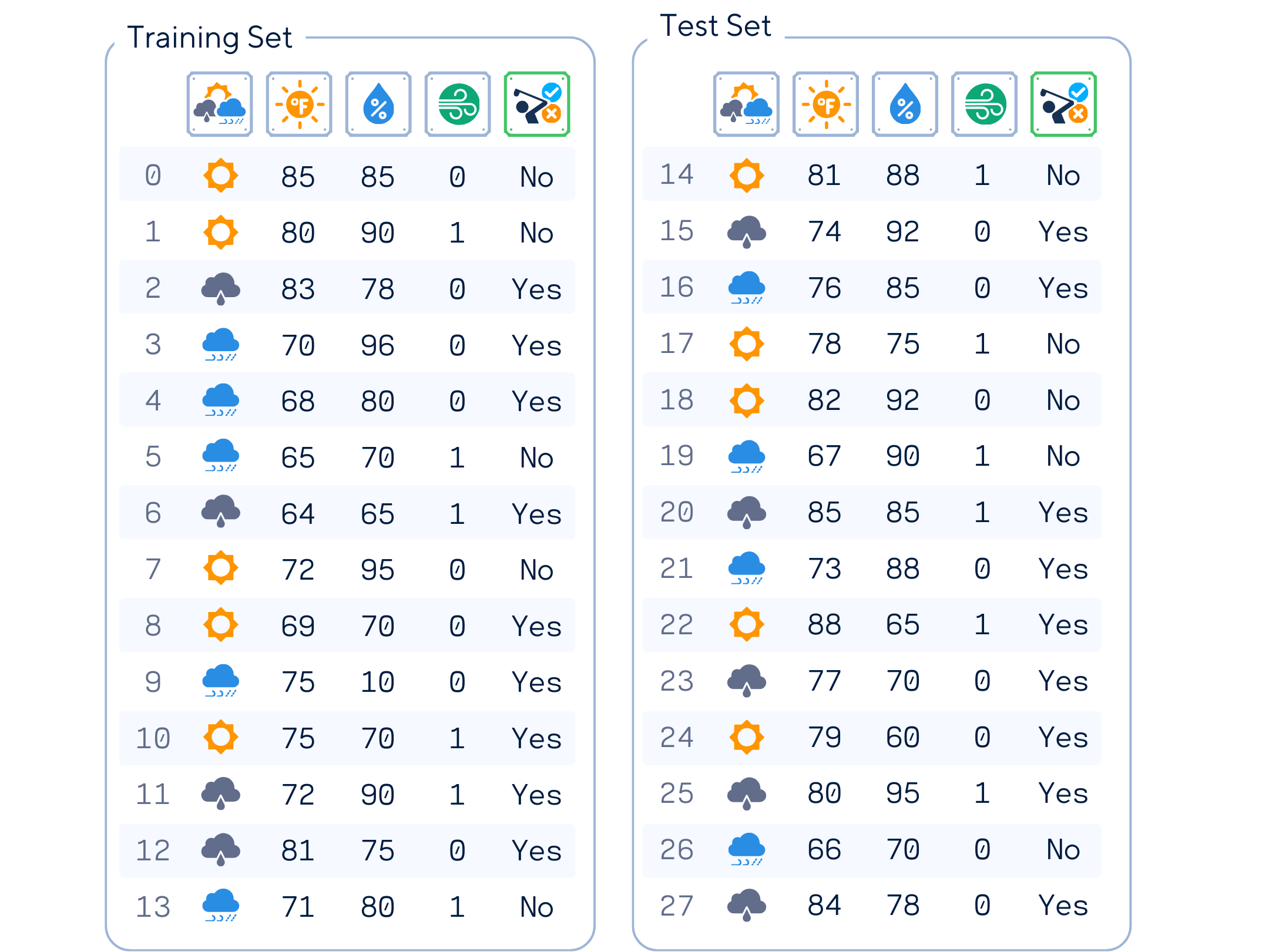
Throughout this article, we'll use this artificial golf dataset (inspired by [1]) as an example. This dataset predicts whether a person will play golf based on weather conditions.
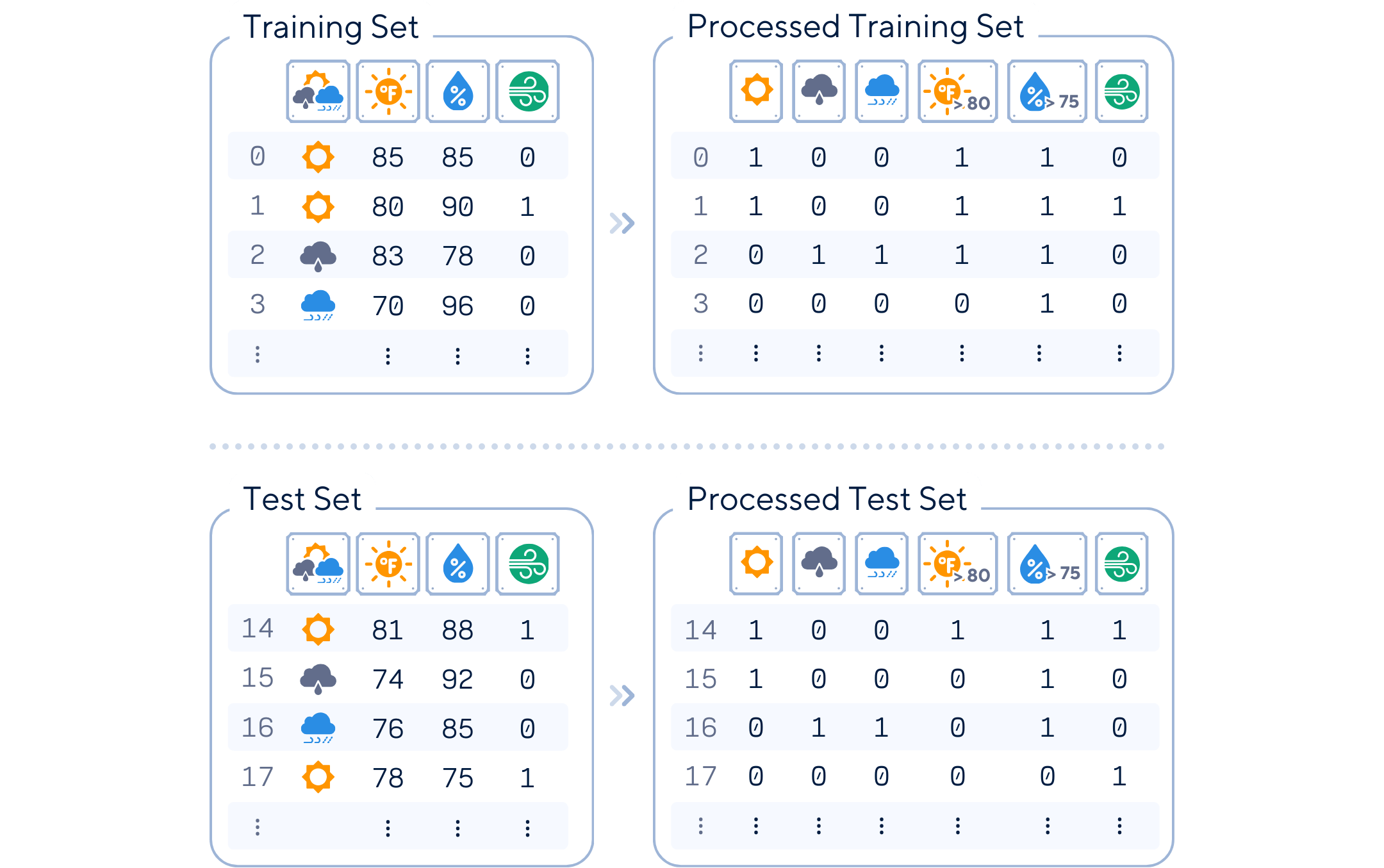
We'll adapt it slightly for Bernoulli Naive Bayes by converting our features to binary.
Main Mechanism
Bernoulli Naive Bayes operates on data where each feature is either 0 or 1.
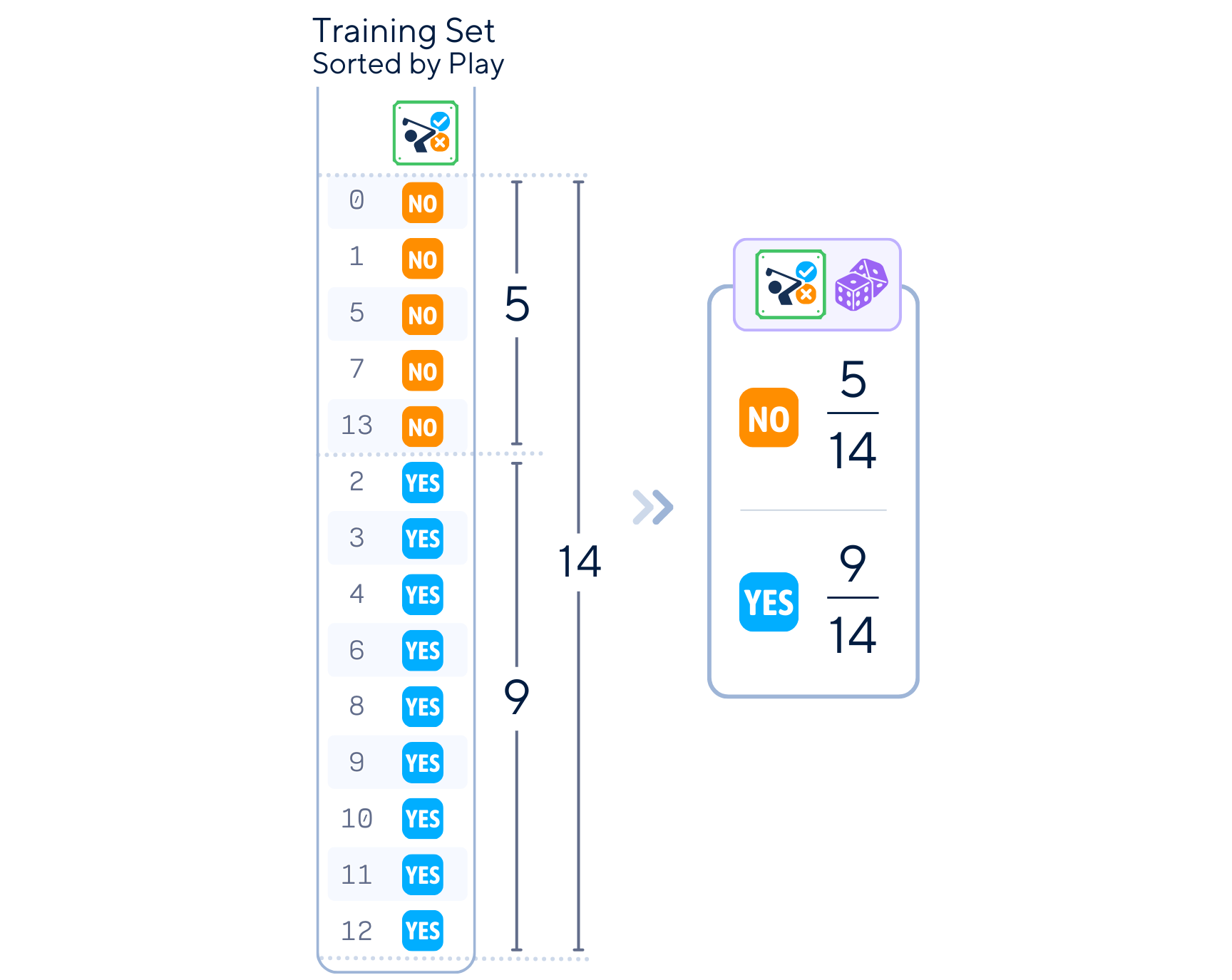
Calculate the probability of each class in the training data.
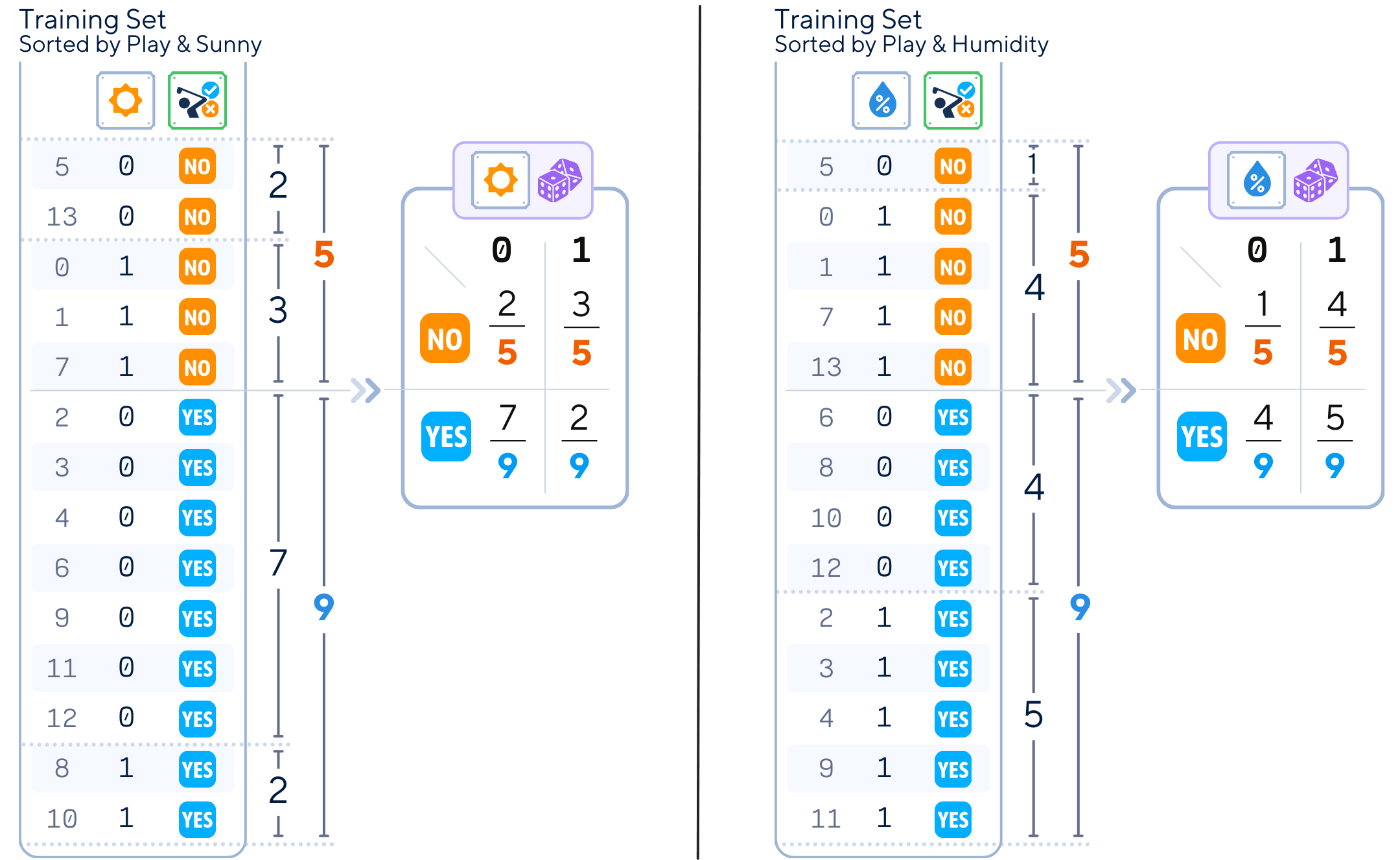
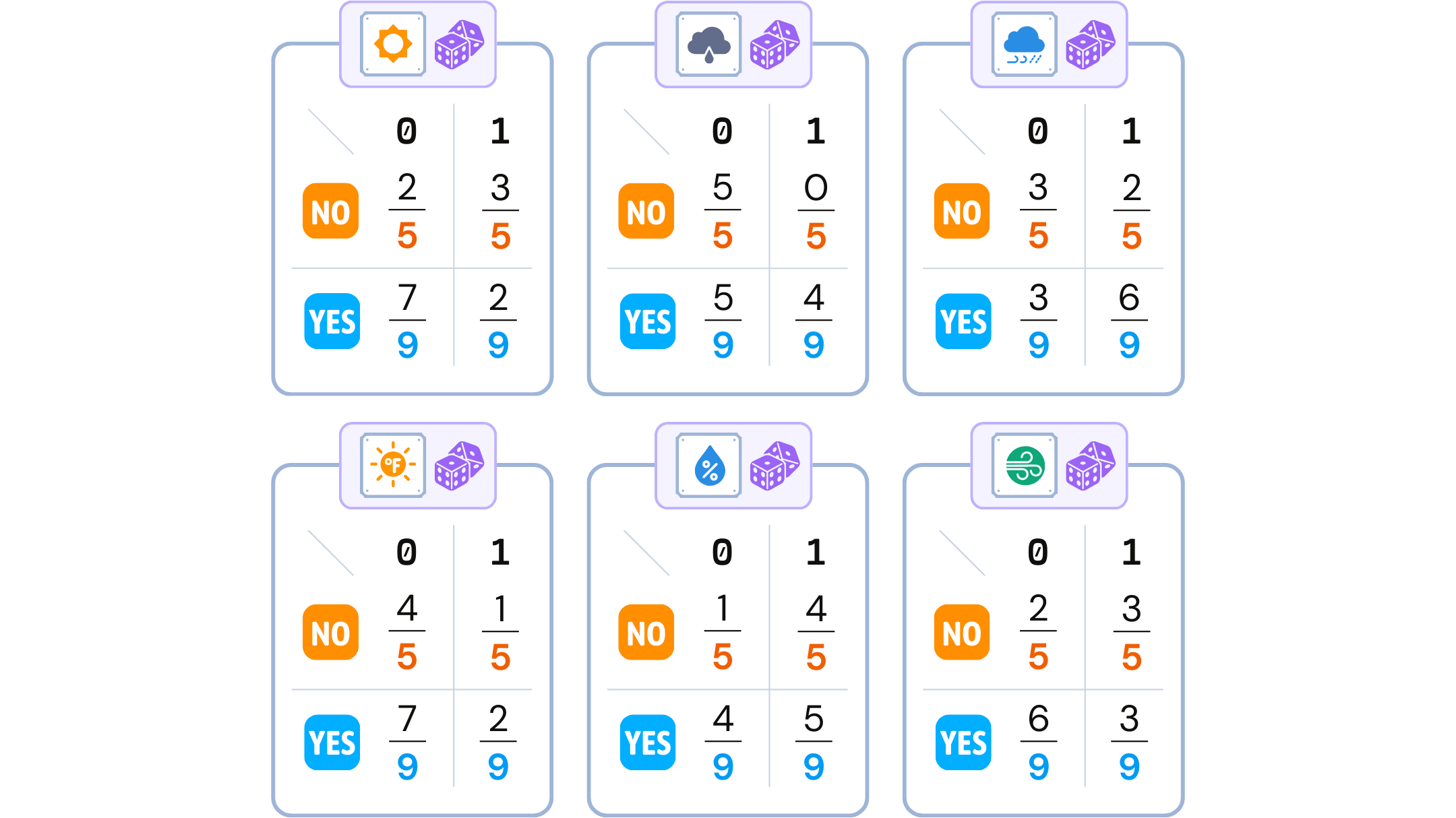
For each feature and class, calculate the probability of the feature being 1 and 0 given the class.
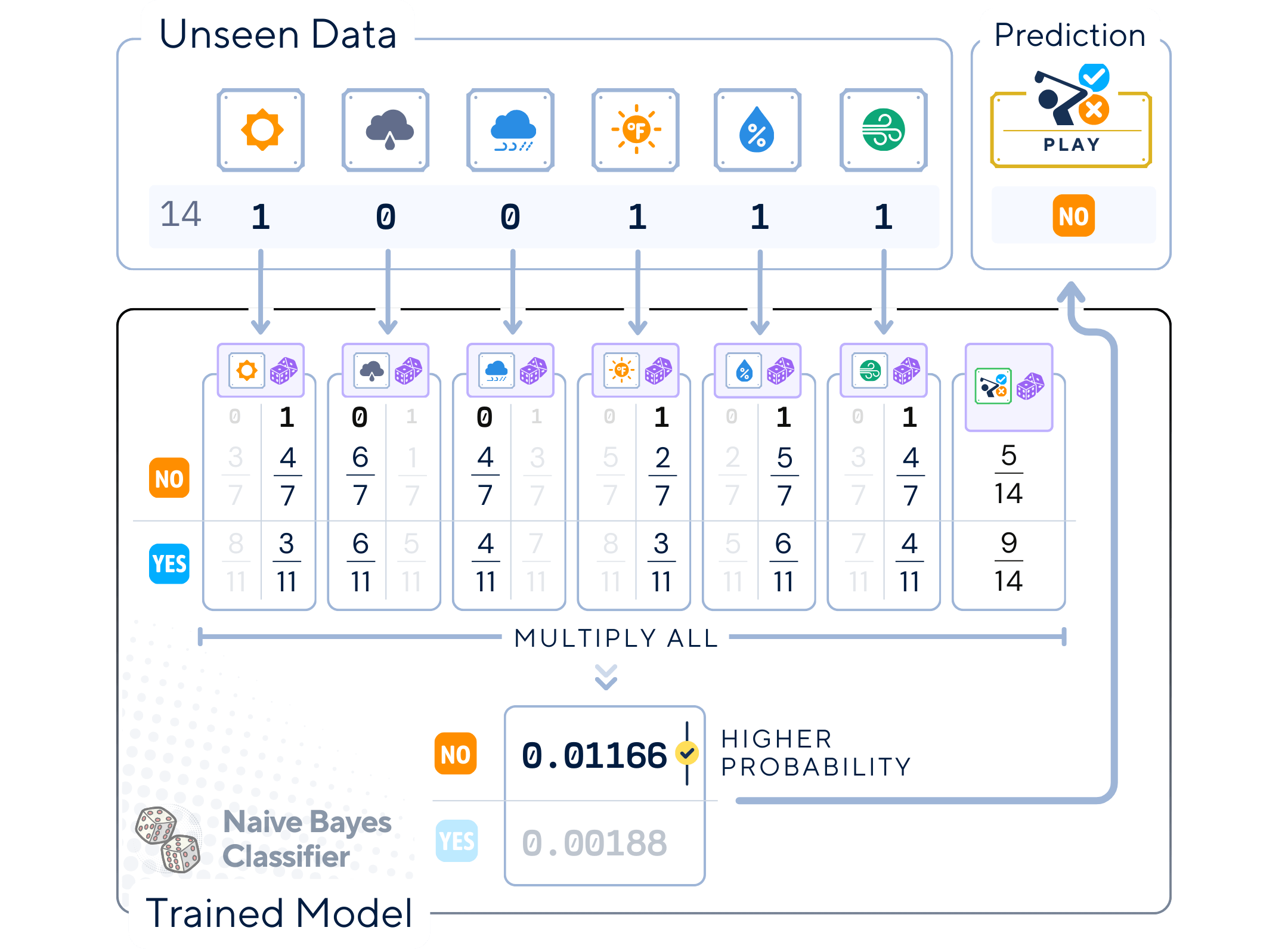
For a new instance: For each class, multiply its probability by the probability of each feature value (0 or 1) for that class.
Predict the class with the highest resulting probability.
Training Steps
The training process for Bernoulli Naive Bayes involves calculating probabilities from the training data:
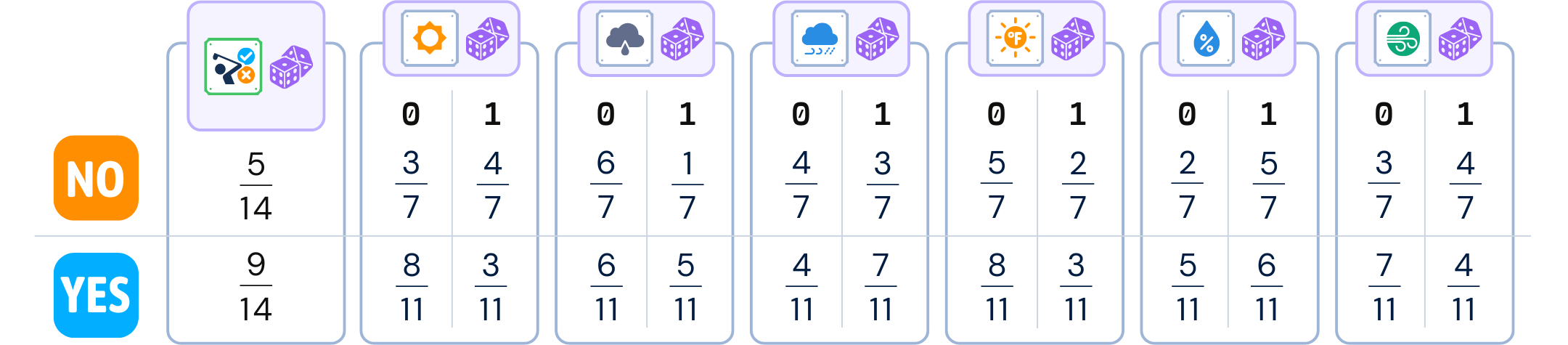
Class Probability Calculation: For each class, calculate its probability: (Number of instances in this class) / (Total number of instances)
2.Feature Probability Calculation: For each feature and each class, calculate:
(Number of instances where feature is 0 in this class) / (Number of instances in this class)
(Number of instances where feature is 1 in this class) / (Number of instances in this class)
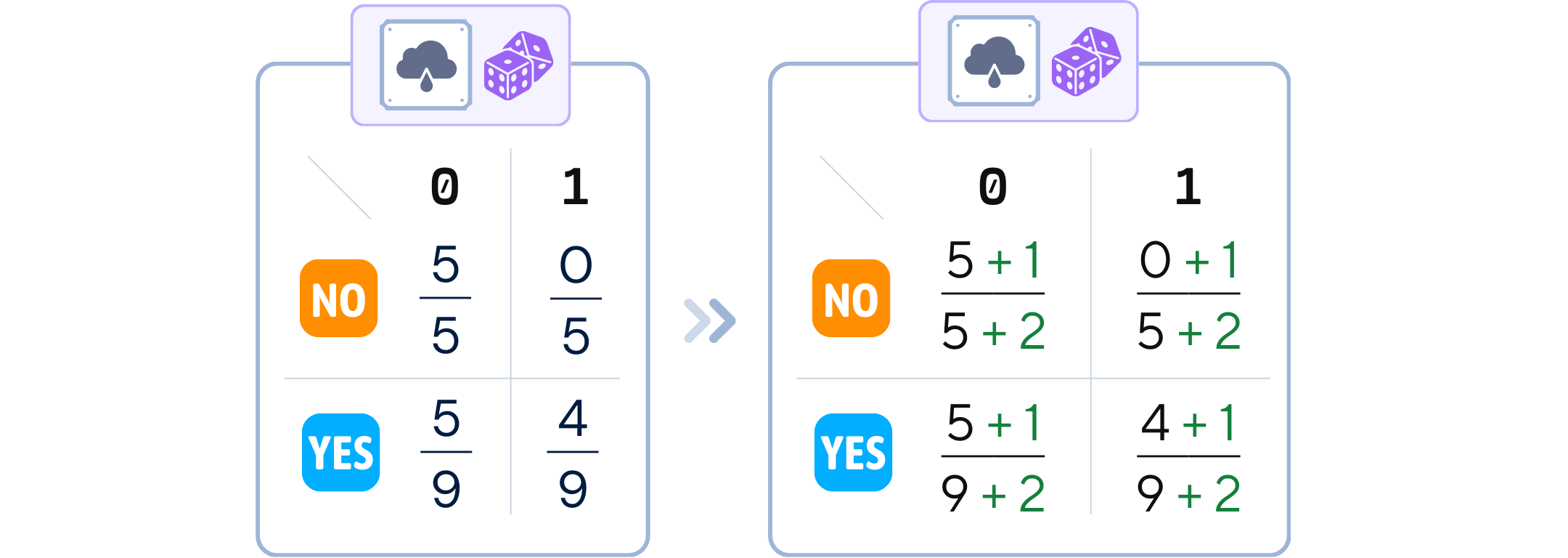
Smoothing (Optional): Add a small value (usually 1) to the numerator and denominator of each probability calculation to avoid zero probabilities
Store Results: Save all calculated probabilities for use during classification.
Classification Steps
Given a new instance with features that are either 0 or 1:
Probability Collection: For each possible class:
Start with the probability of this class occurring (class probability).
For each feature in the new instance, collect the probability of this feature being 0/1 for this class.
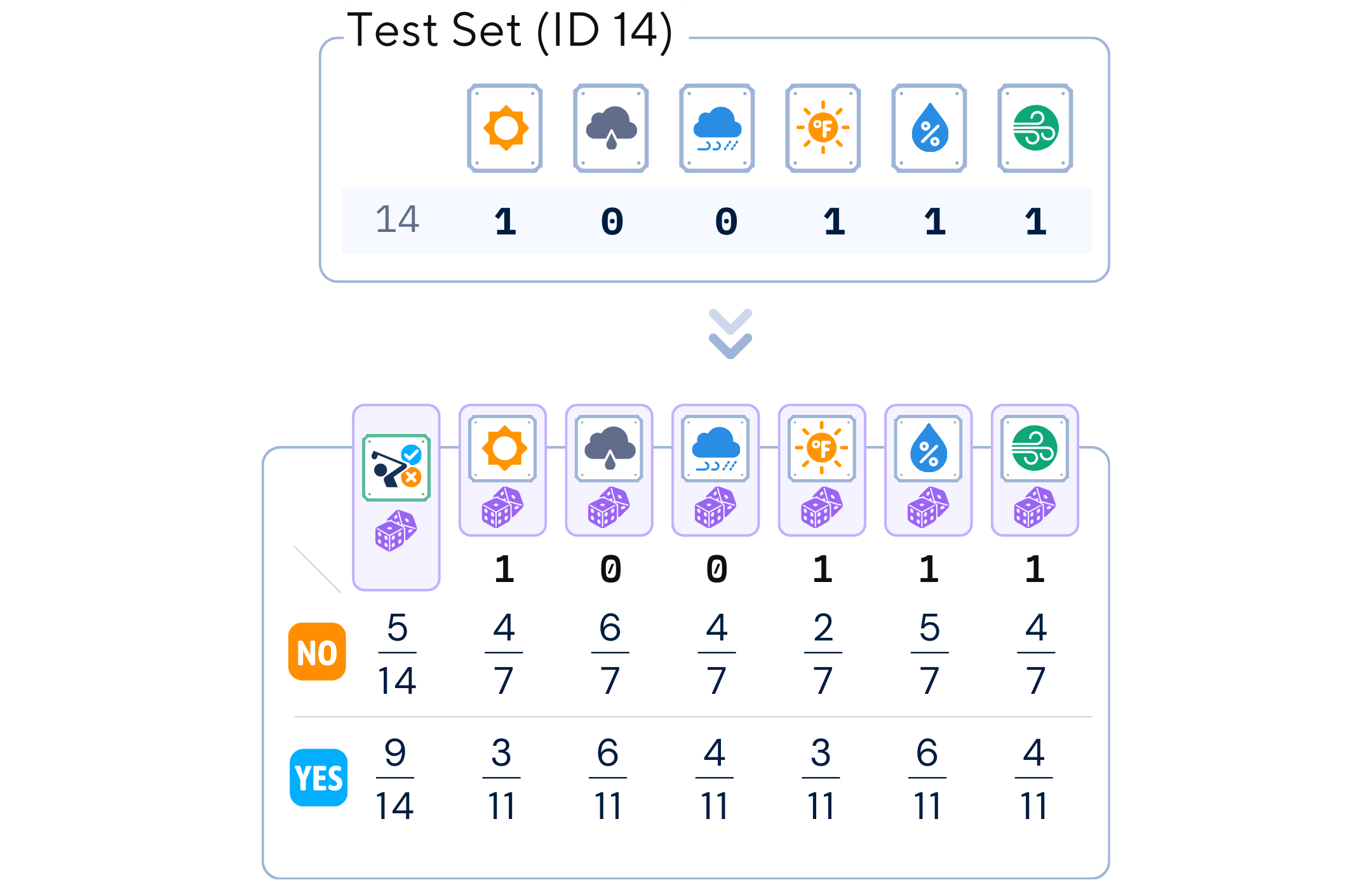
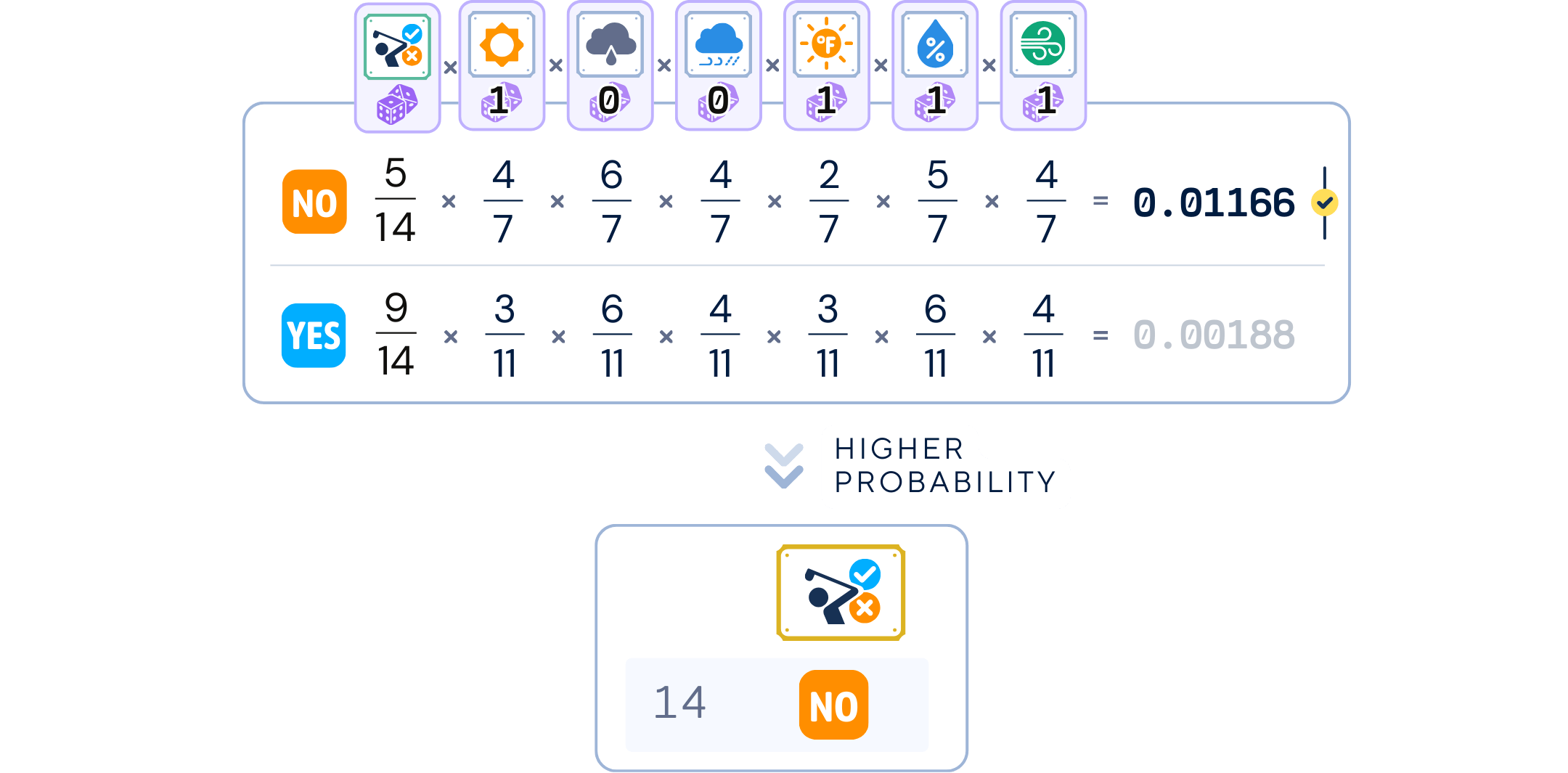
Score Calculation & Prediction: For each class:
Multiply all the collected probabilities together
The result is the score for this class
The class with the highest score is the prediction
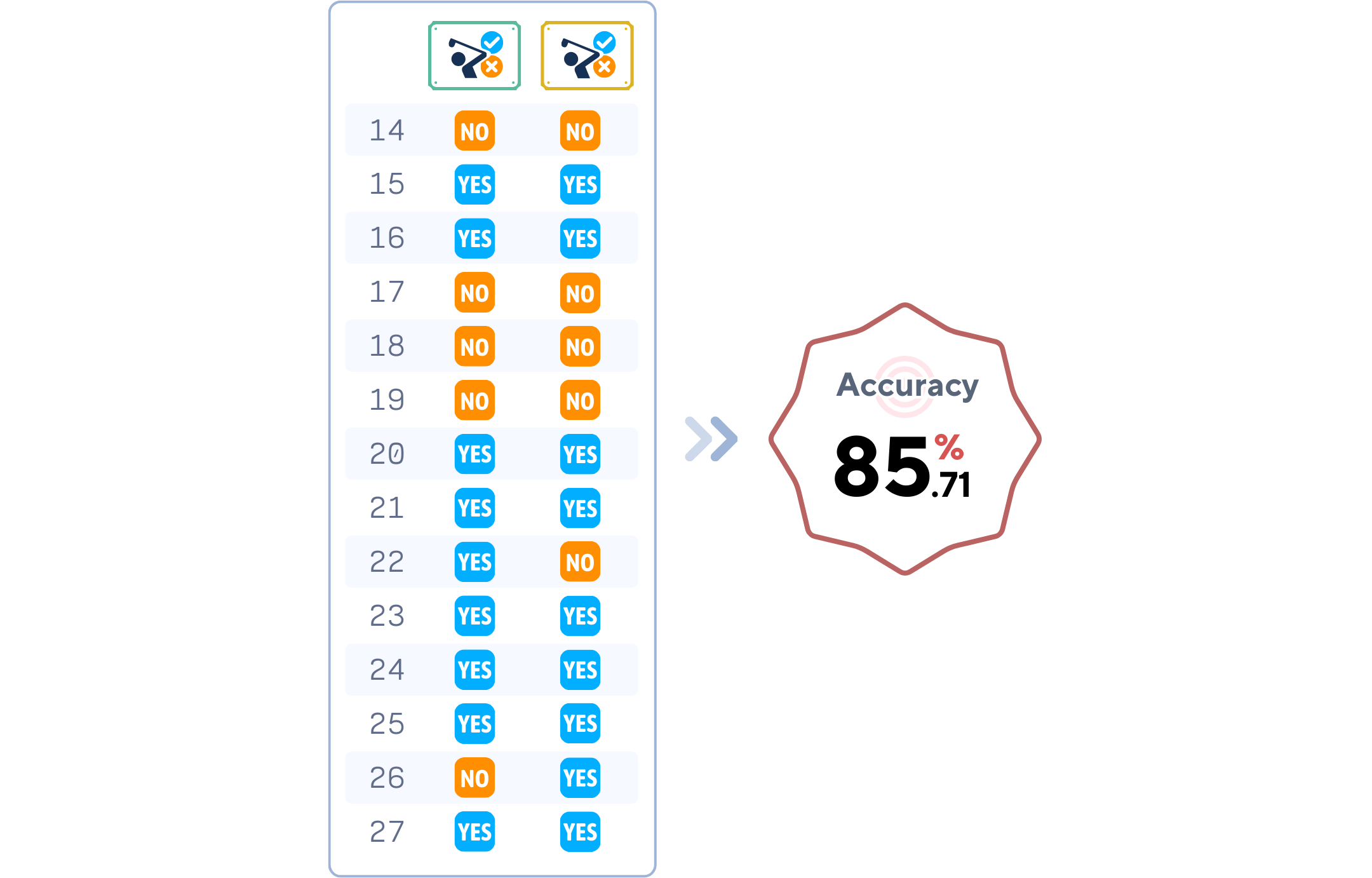
Evaluation Step
Key Parameters
Bernoulli Naive Bayes has a few important parameters:
Alpha (α): This is the smoothing parameter. It adds a small count to each feature to prevent zero probabilities. Default is usually 1.0 (Laplace smoothing) as what was shown before.
Binarize: If your features aren't already binary, this threshold converts them. Any value above this threshold becomes 1, and any value below becomes 0.
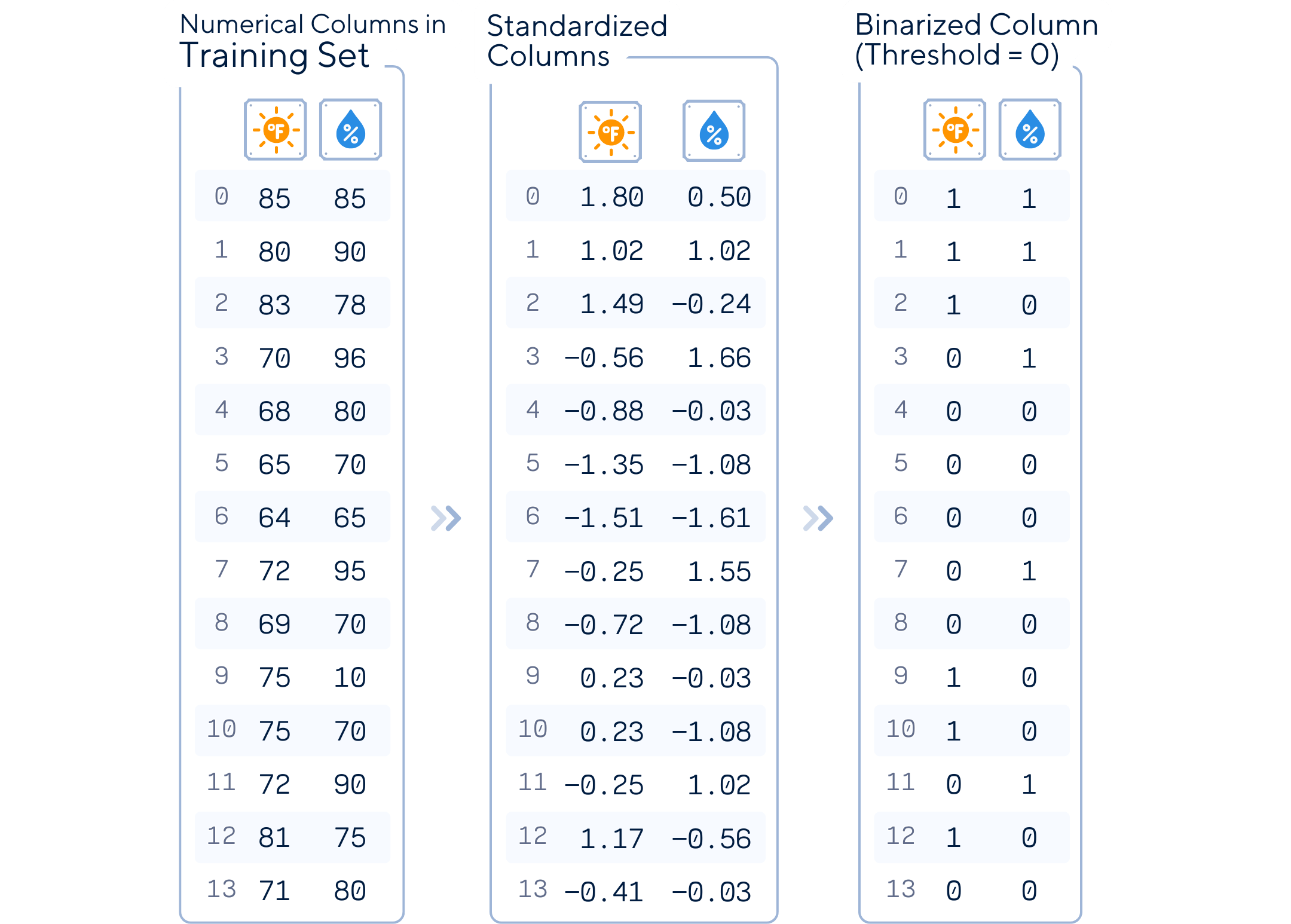
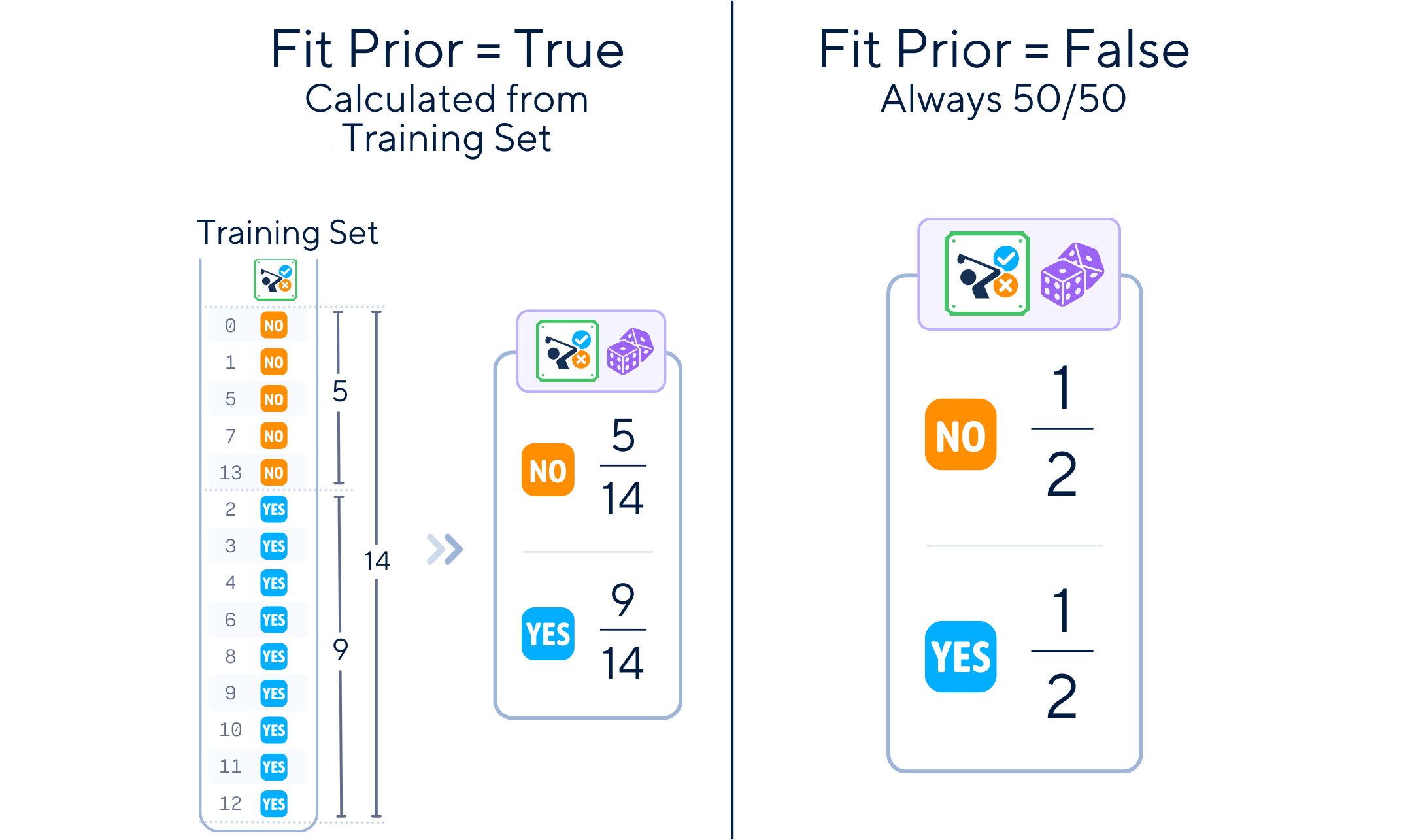
Fit Prior: Whether to learn class prior probabilities or assume uniform priors (50/50).
Pros & Cons
Like any algorithm in machine learning, Bernoulli Naive Bayes has its strengths and limitations.
Pros:
Simplicity: Easy to implement and understand.
Efficiency: Fast to train and predict, works well with large feature spaces.
Performance with Small Datasets: Can perform well even with limited training data.
Handles High-Dimensional Data: Works well with many features, especially in text classification.
Cons:
Independence Assumption: Assumes all features are independent, which is often not true in real-world data.
Limited to Binary Features: In its pure form, only works with binary data.
Sensitivity to Input Data: Can be sensitive to how the features are binarized.
Zero Frequency Problem: Without smoothing, zero probabilities can strongly affect predictions.
Final Remarks
The Bernoulli Naive Bayes classifier is a simple yet powerful machine learning algorithm for binary classification. It excels in text analysis and spam detection, where features are typically binary. Known for its speed and efficiency, this probabilistic model performs well with small datasets and high-dimensional spaces.
Despite its naive assumption of feature independence, it often rivals more complex models in accuracy. Bernoulli Naive Bayes serves as an excellent baseline and real-time classification tool.
🌟 Bernoulli Naive Bayes Simplified
Further Reading
For a detailed explanation of the BernoulliNB Classifier and its implementation in scikit-learn, readers can refer to the official documentation, which provides comprehensive information on its usage and parameters.
Technical Environment
This article uses Python 3.7 and scikit-learn 1.5. While the concepts discussed are generally applicable, specific code implementations may vary slightly with different versions.
About the Illustrations
Unless otherwise noted, all images are created by the author, incorporating licensed design elements from Canva Pro.

Reference
[1] T. M. Mitchell, Machine Learning (1997), McGraw-Hill Science/Engineering/Math, pp. 59
𝙎𝙚𝙚 𝙢𝙤𝙧𝙚 𝘾𝙡𝙖𝙨𝙨𝙞𝙛𝙞𝙘𝙖𝙩𝙞𝙤𝙣 𝘼𝙡𝙜𝙤𝙧𝙞𝙩𝙝𝙢𝙨 𝙝𝙚𝙧𝙚:
𝙔𝙤𝙪 𝙢𝙞𝙜𝙝𝙩 𝙖𝙡𝙨𝙤 𝙡𝙞𝙠𝙚: