


Opinion
Climate
Economy
Politics
Rights & Justice
War & Peace
Waving at imaginary crowds
Further

Being There: Are These People In the Room With Us?

These truly-through-the-looking-glass days, it seems the drunk great-uncle you really didn't wanna ask to dinner is somehow getting worse. Scarily and no longer mirthfully, the befuddled "head" of a GOP blitzed on projection daily spirals deeper into phantasmagoria - slurring words, crafting fictions, renaming oceans, rekindling grievances, losing it over trifles and consorting with imaginary friends as the world burns. An Orange-Stain plea from No Kings for the coming election: "Clean Up On Aisle USA" please. Soon.

To be clear, Trump was a lying fabulist from way back. In the glitzy 1980s and 1990s, he regularly posed as a successful businessman, savvy dealmaker and cad-about-town who'd infamously call reporters or publicists as "John Barron" to boast about his money or conquests - a ploy he admitted in later court depositions he learned from his Nazi father. In power, like "a pre-teen with a girlfriend in Canada nobody's met," he's long invented "friends," fans, sources who praise him and his dreadful policies, from cultists invariably with tears in their eyes who "thank me for saving the country" to U.S. CEOs and "one of the great people of China, from the highest echelons" who inexplicably extol his disastrous tariffs.

Lately, though, the GOP is reportedly freaking out, watching the line between fact and fiction increasingly blur in Dear Leader's mashed-potato mind as the economy keeps tumbling and vital mid-terms approach. They want him to celebrate (albeit largely imaginary) tax cuts, trade deals, safe borders, winning fights against drag shows and "transgender for everyone" (sigh). Instead, he raves about livestreamed executions, the hotness of GOP candidates, often in the wrong state - "His ass, shit, it's like a pile of muscle" - his bestie Putin who's been "fine on Ukraine," how "not a single" undocumented immigrant has entered America since he took office, how soaring gas and diesel costs are "a small price to pay," though it's unclear for what.

He garbles words or makes them up - "When we had the hurricane...We call it a watercane" - prompting excited patriots to up their expectations: "OK, cancel the Blue Wave, we want a Blue Watercane." Wearily, he jokes about creating a robot lookalike on the campaign trail- "Nobody would know the difference" - so he can stay home and watch TV, his true, small vocation. Weirdly, he fantasizes about trashing other countries: He boasts about "polling higher than anyone has ever polled in Venezuela," which is why "after I finish with this" he'll to go Venezuela, "learn Spanish quickly, it won't take long, I'm good at languages" and run for president there, and yes we are here for it.

Hopefully, Venezuela won't have pesky reporters asking him questions that drive him to melt down in "dementia anger-flare." Because he lacks both impulse control and any trace of decency, he's also lauded Vivek Ramaswamy's grotesque ad against rape survivor and Dem opponent Amy Acton, wherein her estranged, unhinged mother calls her a liar, charging the Fake News "is trying to convince everyone this Ad is bad because it’s so good!...It's called 'hitting pay dirt.’” He adds that if his "legendary" mother "said anything bad about me, (it) would go down as the Ad of the Decade — Maybe the Century!" Vivek should keep the ad up, he says, so people know Acton is "a DISASTER who, uncontrollably, lies, cheats, and steals!” Killer pot/kettle.

There are more. The racist fraudsters who got rich on corruption - and turned Minneapolis into Fallujah - want us to rat on our neighbors for...fraud under Trump's stammered "Fraud Whistle...Blower Incentive...Program" whereby "Americans (can) report theft of taxpayer dollars," with DOGE "skunk-works" stragglers helping. Turn in someone with $1 billion, you get 1%: "That's a lot of money.” Except the cap is $30K, you probs won't see it, and it's queasily akin to Nazi bounties on Jews. Stephen Goebbels was even there to smear phantom Somalis who get $30 million for a fake daycare, buy BMWs or mansions, fly their kids "first class all over the world...living the high life." What a sick fuck. Meanwhile, America urges, "Call in fraud at 1600 Pennsylvania Avenue."

Alas, the more loopy he gets, the more openly he flies his violent, racist, crassly unfettered flag. There are more curses and more bellicose AI slop like the video of a macho white guy put in prison with three scary black guys, by one scary black cop, who takes them all down: "Bullies Can’t Break a Strong Man." (So many pots/kettles!) The rallies grow more pugnacious too: In the second assault this month, a South Carolina sheriff's office is investigating an attack on a protester - punched in the head, neck and chest - that Trump cheered on, praising the thugs' "courage." "Who's the guy that threw that punch?" he excitedly asked. "I love that." He also mocked the victim as "a very unattractive guy," for a rare combo sick fuck and pot/kettle.

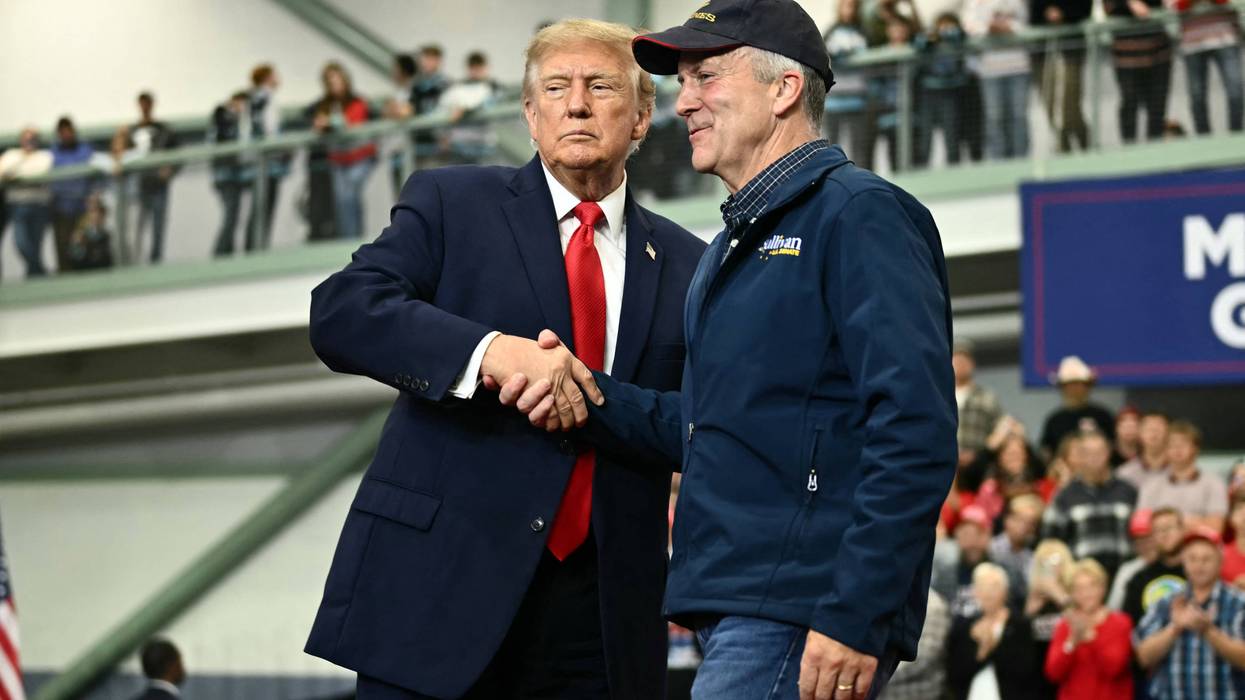
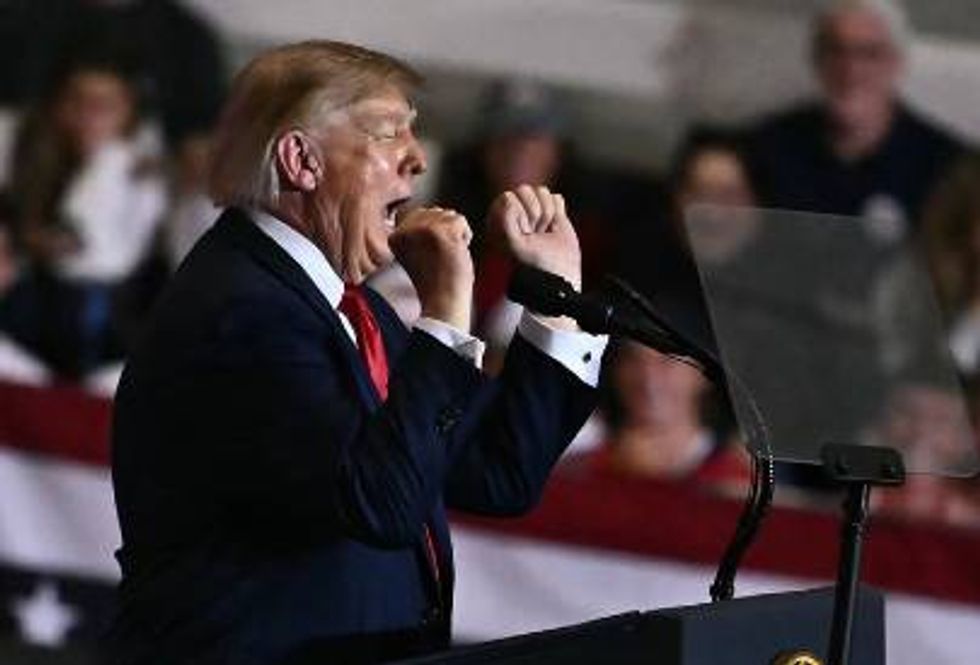
That was at a rally, in a reported “livestock arena” say what, for Darlene Graham, who’s “gonna have a big win.” If so, no thanks to his shambolic speech, which roamed from renaming the Atlantic Ocean - “I was always high end” - to insisting he doesn’t ramble while rambling - “I got - I know everything I’m doing. I got aptitude they dream about” - to again whining about the prizes he didn’t win: The Pulitzer for writing - “The people that got it shouldn’t have gotten it” - and the usual Nobel, despite being “one person who deserves it more than any yuman being." ”Not that I want it - it’s just ridiculous,“ he babbled. ”How the hell do you not get the Nobel Prize? i settled like 8 wars. The woman that got it, I don’t know where the hell she comes from.“ Losingest loser ever.

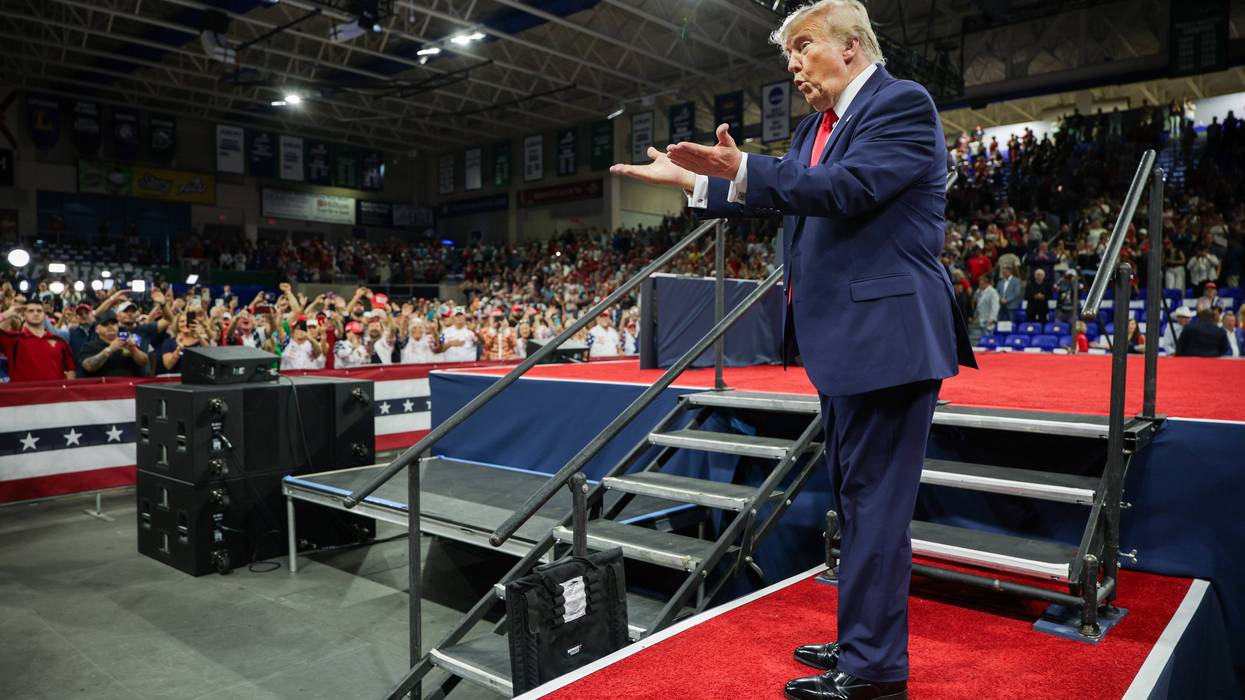
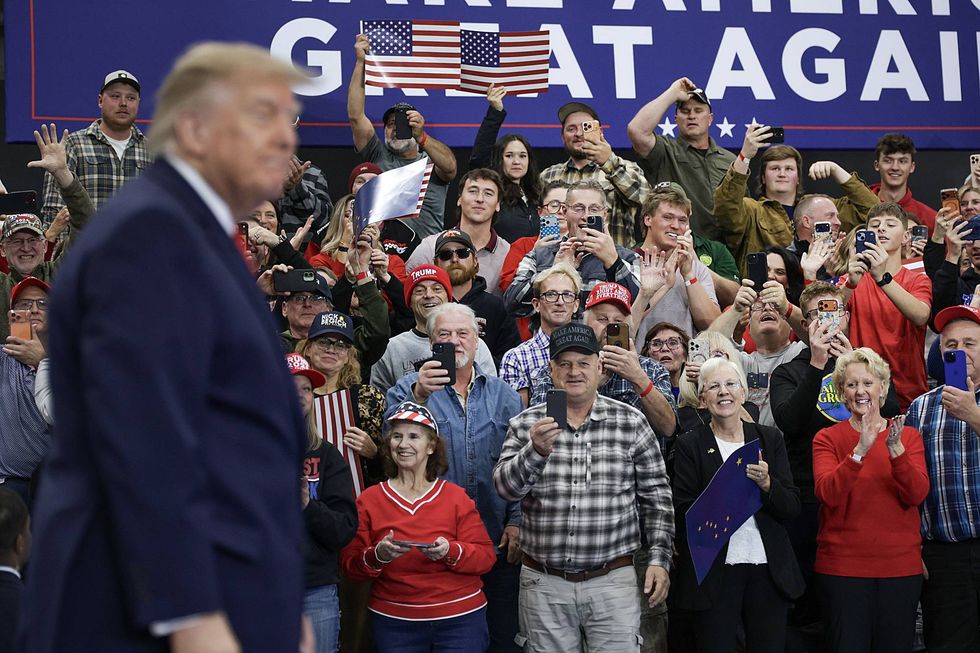
Finally, amidst all the lame, foul, daft fails, there are his deeply undignified transfers: The careening burlesque of a walk to his helicopter in Alaska. The ambling approach to his beloved, million-year helipad when he suddenly stops to acknowledge, salute and wave to a crowd of supporters, aka thin air. Eventually, the camera zooms out to show...empty space. A few seconds later, aides walk out from a different direction; other angles - here and here - show the same abyss, for which Fox would've run Biden out of town. Same for last week's event, ostensibly to honor first responders where, amidst a losing war, crumbling economy, burning planet and hungry children, Nero nattered and raved about his house projects. Nothing to see here.

“You're seeing this for the first time. This used to be grass. So if we did this, you couldn't do it. It was unusable. You know, this is built on a wetland. So the grass was always wet. Even if you were in a drought, the grass was soaking wet. And especially women with the high heels, they'd be holding their shoes. They go out and buy beautiful new high heels that go into the White House and they come back and their shoes are destroyed. But we did a job with the same stone that matches the White House stone and hasn't been totally finished. We're going with the black over here, too, because the limestone doesn't hold up well. Never, never did. Never will. But what we've done here is really amazing. We put a brand new coat over the White House, brand new coat. We fixed up the walls. They were all broken, chopped, terrible shape. A lot of the ornamentation, like around the windows, was broken. And many years ago, 30, 40, 50 years ago, probably a lot during Biden three years ago because he had no idea what the hell he was doing. But you'd look at a window and you'd see ornament on the right side. And on the left side, you'd see it was it had fallen off. Some people think that's OK, but I don't think it's OK. So we had molds made of the right side. We put it on the left side. It's all perfect now. So we re-skinned. Basically, it's a re-skinning. And that building is good to go for another 100 years or at least actually. But even this, the you see the the top sections where it was so bad, I didn't even like standing under it. The thing was all cracked and broken all over the place. We put the sign up, solid brass, half inch thick, as opposed to laminate. You ever see these laminate? They they don't want to spend the money on the brass. So they have a piece of brass laminated. It's about a hundredth of an inch thick. And they put it on a piece of wood to save a lot of money. And then in about two years, it decomposes and it's laying all over the floor. We don't do that. But up there is the Rose Garden. And then we, as you know, that wall has sat for 150 years empty. And I said, something has to be on that wall. And I just had the the notion I've often thought of it because I've never seen it before. A presidential walk of fame. So we went from George Washington to Trump. And that will be extended on this wall right up here because somebody said, oh, but you have no room for anybody else. I said, no, it extends this way. And but I'm going to have to leave that because whoever it is, maybe they won't be able to figure that out. And if they don't figure it out, I don't know what they're going to do. You know, but we have we have at least one hundred and twenty five years of extension going this way. So it's fun. But everybody loves the presidential walk of fame. Nobody knows if there is any. And we have a very generic, very good description of every president from Washington all the way down. And we get a little bit more personal as we get closer to my my year. Talk a little bit about in more detail about what we've had to put up with....All I do is write the truth.” - Donald J. Trump
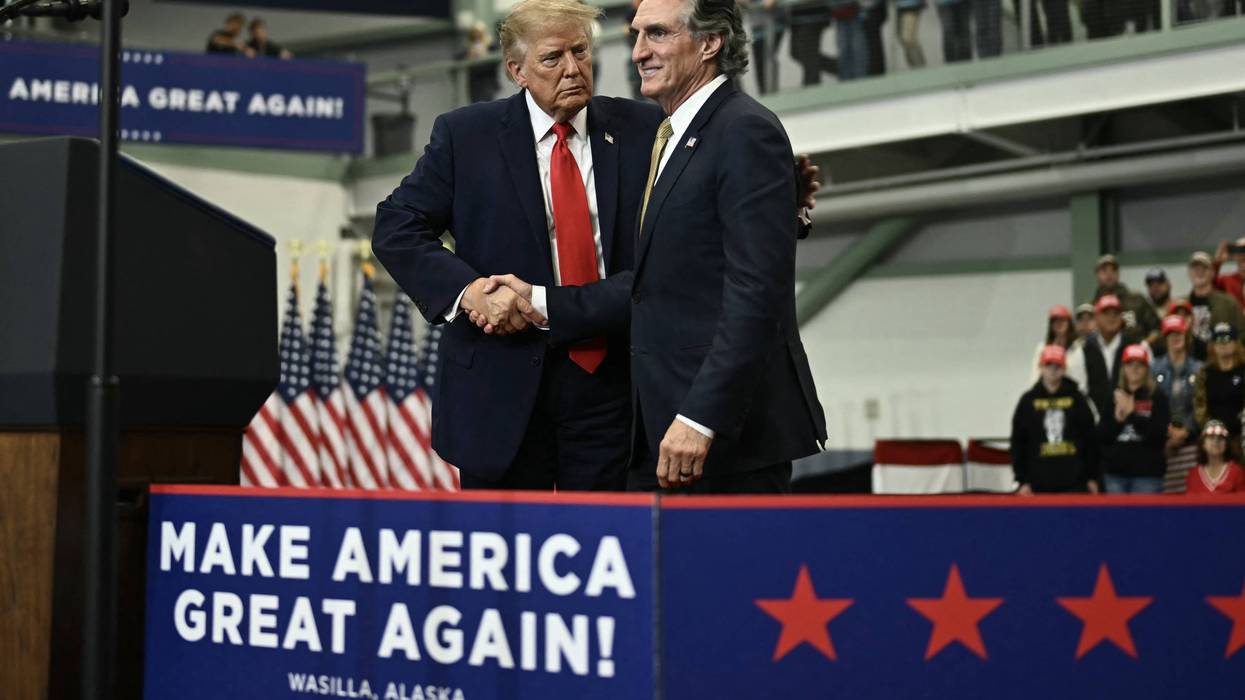
Ladies and gentlemen, the President of the United States Ladies and gentlemen, the President (sic) of the United StatesGetty Image

SEE ALL
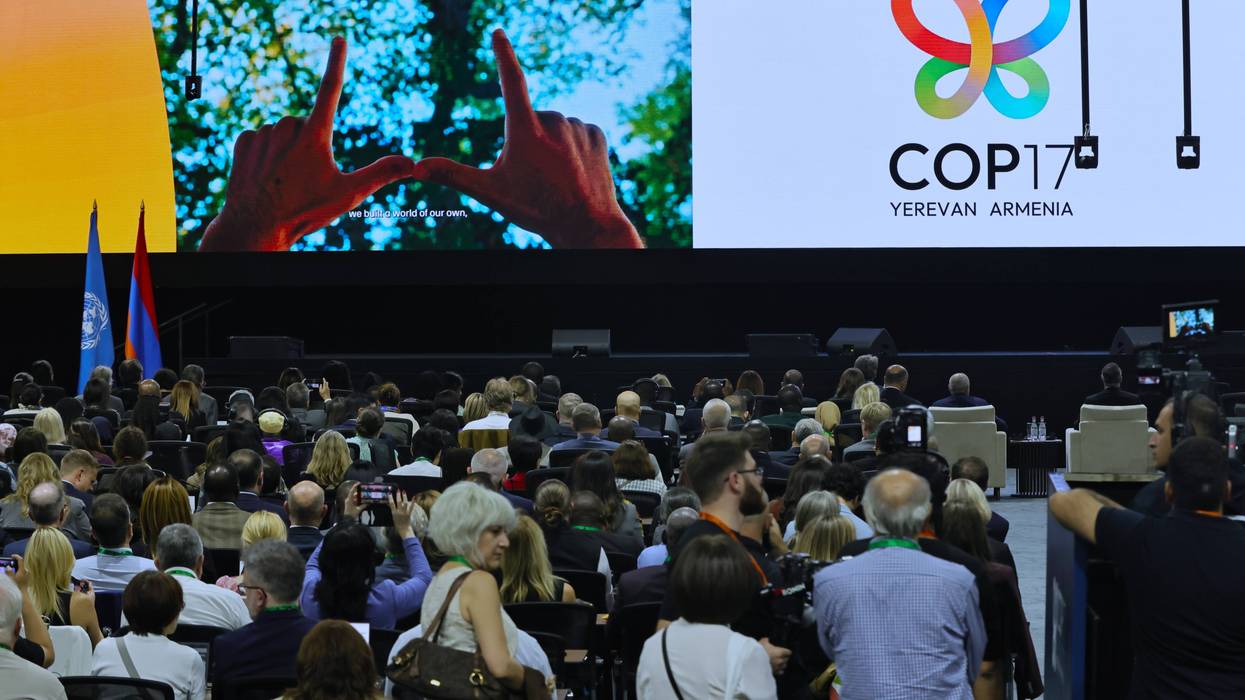
The Opening Ceremony of the 17th Conference of the Parties to the Convention on Biological Diversity was held in Yerevan, Armenia on October 18, 2026.
News

As Biodiversity Summit Begins, 'Systems That Sustain Life on Earth Are Under Threat'

Four years after world leaders agreed to the Kunming-Montreal Global Biodiversity Framework, representatives from nearly 200 nations gathered in the Armenian capital on Monday for a summit to review progress on the agreement and discuss future actions to protect nature.

In the lead-up to the 17th Conference of the Parties to the Convention on Biological Diversity (COP17) in Yerevan, the United Nations Environment Program released a "State of Biodiversity Action" report. UN Secretary-General António Guterres said that the framework "has inspired action across the globe," with nearly 90% of parties establishing national targets, but "progress is uneven, and far too slow."

The framework—sometimes called the "Paris Agreement for Nature"—features 23 targets for 2030 and four for 2050. The world isn't on track to meet any of them, including its key goal to protect 30% of all land and water by the end of this decade. Guterres noted that "even if current national commitments are met, only 26% of terrestrial and 12% of marine ecosystems would be protected" on that timeline.

The Guardian pointed out that "the last biodiversity summit, COP16 in Cali, Colombia, ended in disarray with no clear agreement on key topics after negotiations ran out of time. Another round of talks were needed in Rome to finish the meeting."

Agence France-Presse reported Monday that "only a handful of world leaders, including UN chief Antonio Guterres but mostly heads of state from nearby Central Asian nations, turned up for a high-level session on Friday ahead of the formal negotiations."

Armenian Environment Minister Hambardzum Matevosyan, who is presiding over the summit, told AFP that success "will not be measured simply by the number of participants, high-level statements, or decisions adopted," but whether nations actually take action. He added at the opening session that "over the next two weeks, our task will be to bridge the differences, build consensus, and ensure that COP17... deliver[s] results commensurate with the urgency of the challenges before us."

Those who are participating in the summit and parties to the convention face pressure from conservation leaders, including Jeffrey Parrish, the Nature Conservancy's global managing director for nature protection, who declared that "our planet is in peril. The biodiversity that sustains us is being lost faster than ever, and ecosystems that fuel our health and economies are fraying."

Parrish called on those in Yerevan to turn the review process "into an acceleration agenda" to boost progress on the 2030 goals, "transform our financial systems" to mobilize investment at the necessary scale, "integrate biodiversity into infrastructure and development decision-making," and "strengthen policy frameworks to deliver durable, area-based conservation outcomes."

Nature COP17 starts today, with governments gathering to assess progress towards restoring nature The target to protect 30% of land for nature by 2030 seems within reach, but ‘paper parks’ won’t cut it - eg just 7% of England is *properly* protected for naturewww.theguardian.com/environment/...

[image or embed]
— Guy Shrubsole (@guyshrubsole.bsky.social) October 19, 2026 at 3:34 AM

An Lambrechts, head of advocacy group Greenpeace's delegation to the summit, said in a statement that "we're halfway to 2030 and the evidence is clear: We are far off track to reach the 30×30 targets. The systems that sustain life on Earth are under threat, and decisions made at COP17 must deliver a clear course correction to protect our planet's ecosystems."

"This COP can't become a mere entry in a vast log of destruction," she argued. "Governments need to agree on concrete actions that tackle the drivers of biodiversity loss, increase finance, and redirect money flows to where they are needed. But decisions in Yerevan will only matter if governments follow through at home. They cannot continue promising to protect nature while supporting its destruction through harmful subsidies and incoherent policies. Any more delay is a threat to our survival on the planet."

Nichanan Tanthanawit, global project lead for Greenpeace's Ocean Justice Campaign, stressed that "protecting 30% of the planet by 2030 is not just a numerical target. Our ambition must be centered around justice, equity, and those who protect nature. Indigenous Peoples and local communities have cared for these lands and waters for generations, yet their knowledge, rights, and leadership are still too often overlooked."

Camila Jardim, an international political expert at Greenpeace Brazil, highlighted how biodiversity concerns connect to the fossil fuel-driven climate crisis—which world leaders have also failed to adequately address, despite scientists' warnings.

"The world is moving towards a looming 1.5ºC overshoot and the sixth mass extinction, with the human-caused climate and biodiversity crises already severely impacting people all over the world," Jardim said, referring to the Paris Agreement's temperature rise target for this century. "Those are not separate issues, but pieces of the same puzzle, and action is more urgent than ever."

"Governments can make the most impact with aligned policies to address both crises... together, with clear actions for the short, medium and long term," she continued. "This is especially critical for primary forests, which are essential for both climate stability and biodiversity protection, and the Brazil-led roadmap to halt and reverse deforestation and forest degradation by 2030 offers a real opportunity for strengthening synergies between conventions. Protection means tackling not only deforestation but also degradation, and ensuring that climate and biodiversity commitments reinforce each other rather than pull in different directions."

Europe can’t lead on nature at COP17 while cutting biodiversity cash at home

[image or embed]
— euobserver — EU news that matters (@euobserver.com) October 18, 2026 at 3:08 PM

Also attentive to the talks in Armenia on Monday, the International Union for Conservation of Nature (IUCN) released recommendations and guidance on how to incorporate ecological integrity—or "how closely an ecosystem’s species, structure, functions, and ecological processes remain within their natural range of variation"—into relevant policies and practices.

"The world has made ambitious commitments to halt and reverse biodiversity loss, but success cannot be measured by simply counting the number of conservation areas established, the species protected, or the amount of land and water conserved," said John G. Robinson, a Wildlife Conservation Society scientist who co-chairs the IUCN Task Force on Ecological Integrity.

"The real test is whether natural ecosystems—forests, grasslands, freshwater systems, and oceans—are maintaining or recovering the ecological integrity needed to sustain life," Robinson explained. "Do these places continue to support healthy wildlife populations, functioning ecosystems, and the natural processes that make life possible? By focusing on ecological integrity, we can make conservation more effective, and governments can be more accountable for results."

SEE ALL
'Consumers Are Feeling Spooked': Trump's Failed Economic Policies Send Price of Halloween Candy Soaring
News

'Consumers Are Feeling Spooked': Trump's Failed Economic Policies Send Price of Halloween Candy Soaring

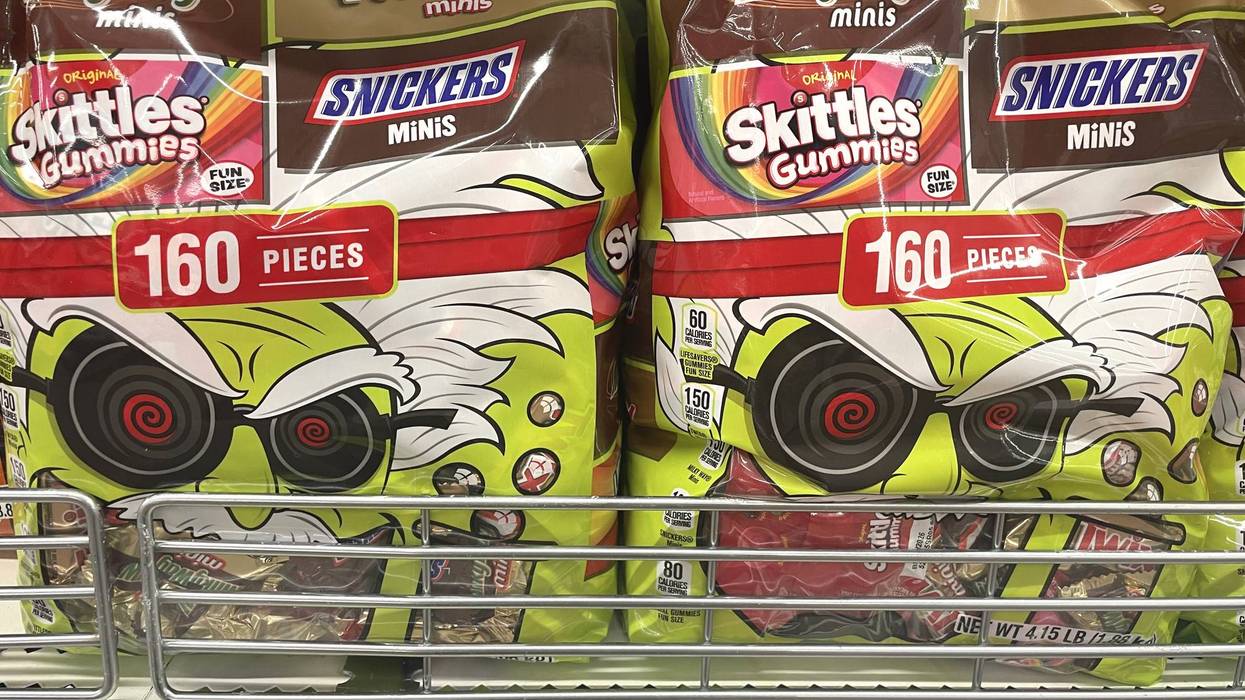
President Donald Trump's illegal war with Iran and his global tariffs have tag-teamed to jack up the price of Halloween candy, according to a report published Tuesday.

The new analysis by Groundwork Collaborative and The Century Foundation finds that the price of popular Halloween candy has increased by more than 15% during the last year, which is several times the overall rate of inflation over the same period.

The biggest jump in price came from candy maker Mondelez, whose sour gummy candy variety pack saw its price shoot up by more than 39% in the last year.

Other notable price hikes included the Hershey variety pack, which increased by nearly 20%; the Ferrero chocolate pack, which increased by 19%; the Mars chocolate variety pack, which increased by over 13%; and Tootsie seasonal lollipops, which increased by over 7%.

The report notes that Trump's illegal Iran War and his aluminum tariffs have had an impact on candy prices by driving up packaging costs for sweets.

However, the report also points the finger at the candy companies, which have continued to raise prices even after receiving a tariff exemption for cocoa and getting refunds for illegal tariffs Trump charged them last year.

"Hershey’s profit margin jumped 50% year over year, helped by pocketing a $9 million tariff refund that never made its way back to shoppers," the report notes, "while Mondelez saw a similar 30% bump in margins."

Kyle K. Moore, chief economist at The Century Foundation, said that Trump's policies had helped turn "a fun family tradition into another terrifying bill."

"With debt and high prices eating into families’ Halloween budgets," said Moore, "it's no wonder consumers are feeling spooked."

Elizabeth Pancotti, vice president of policy and advocacy at Groundwork Collaborative, pointed out that consumer sentiment recently hit record lows, as Americans are also struggling with the rising costs of gasoline and groceries.

"Trick-or-treaters will have to make due with miniature candy bars this year to accommodate Trump’s king-size price hikes," Pancotti said.

A Sunday report in The Cleveland Plain Dealer highlighted an additional reason for the high price of Halloween candy: The price of sugar, which has been affected by "poor weather and weaker production forecasts in several major sugar-producing regions."

A survey released earlier this month by Lending Tree found that Americans expect to spend significantly less on Halloween overall this year, with 23% saying they plan to buy fewer overall Halloween items compared to a year ago, while 24% said they expected to go into debt while celebrating the holiday.

Data released by the US Bureau of Labor Statistics last week showed inflation in September rising to its fastest level in six months, driven in large part by costs related to the Iran War.

SEE ALL
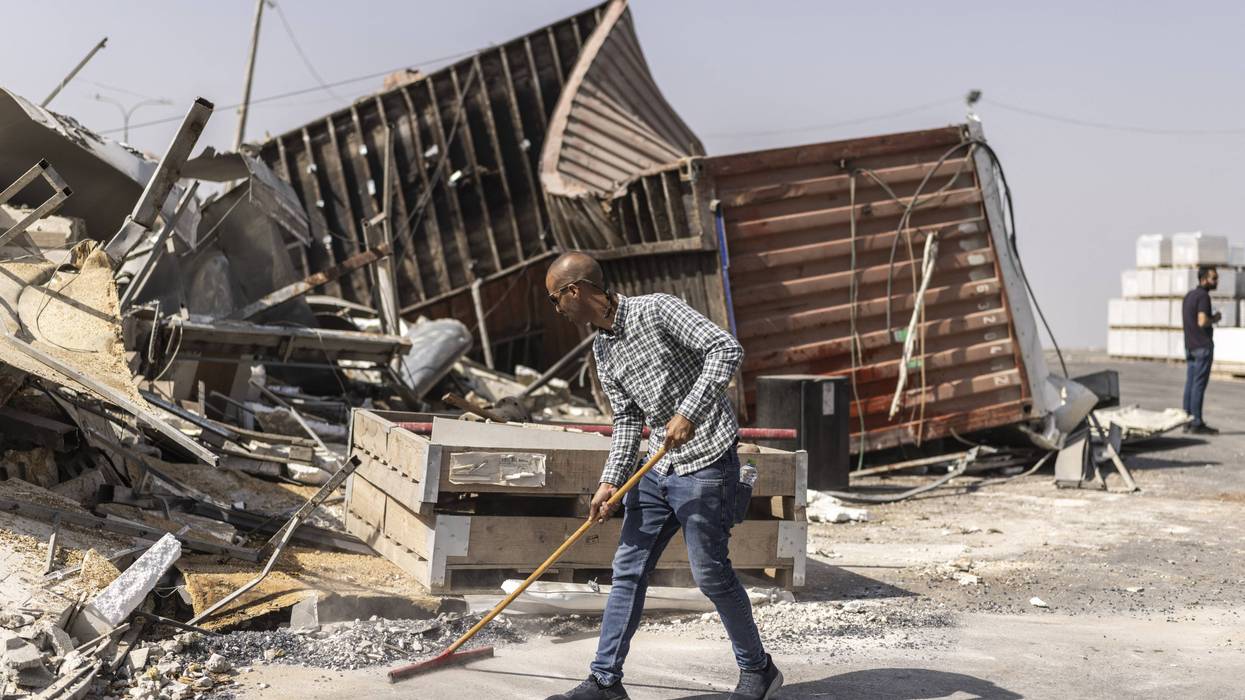
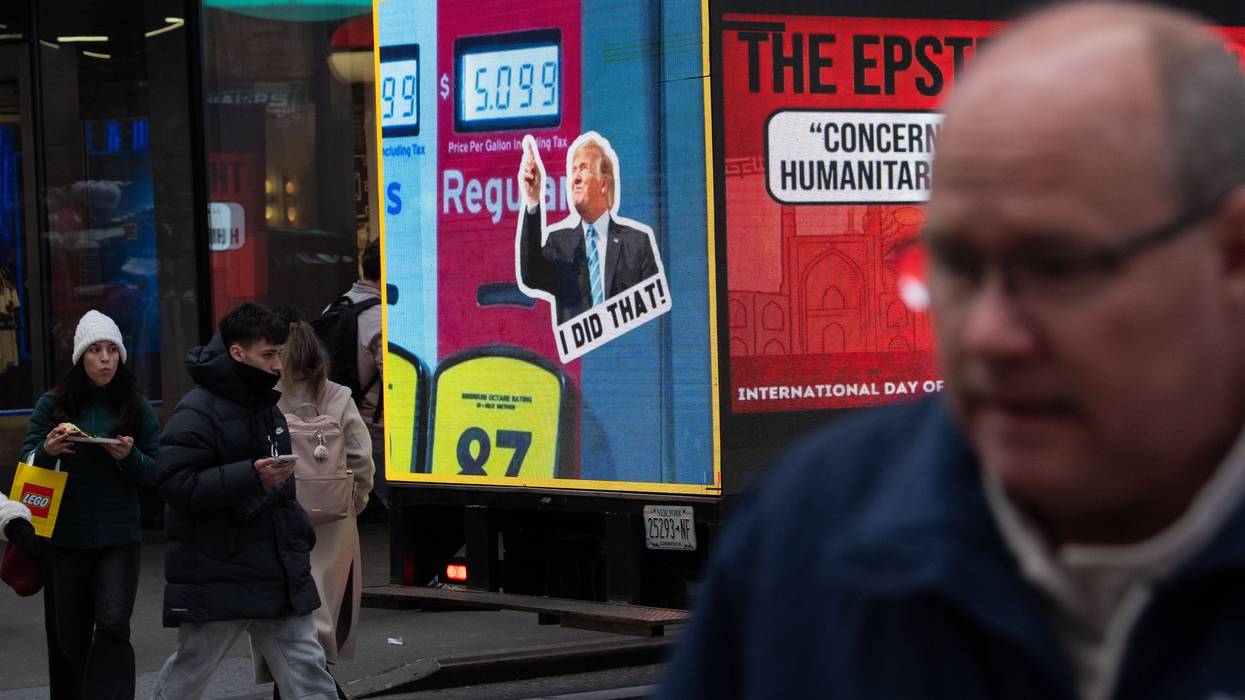
Activists Gather In Times Square For International Day Of Quds Rally
News

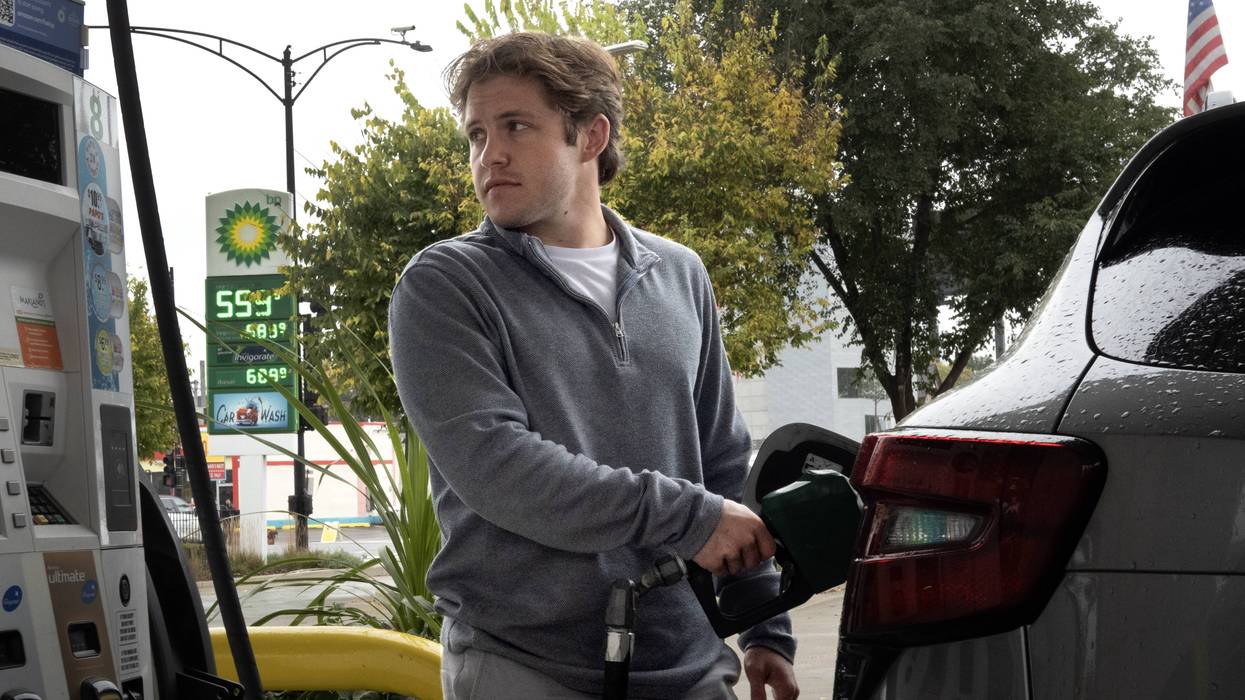
'Just Run This as an Ad': Trump Dismisses Pump Pain to Boast of Oil and Gas Profits

If there was any doubt, President Donald Trump made it very clear Saturday evening that he cares more about wealthy oil and gas executives than ordinary people.

During a midterm campaign rally in Perry, Georgia, Trump acknowledged the high price of oil and gas, but said that the US fossil fuel industry was "making hundreds of billions of dollars."

His advisers, he told the crowd, had instructed him not to mention this "because people are paying a little higher," he said in a condescending voice. "That number's going to come way down," he continued, "but what we've done for this country, we're making money like this country has never made before," seemingly conflating the fortunes of wealthy oil and gas companies with the US as a whole.

"Trump to people who want lower gas prices: 'Fuck you, I’m making money!'" Melanie D'Arrigo, the executive director of the Campaign for New York Health, posted on social media. "Just run this as an ad."

Nation writer Jeet Heer made a similar point, saying that Trump's remarks were an "amazing closing argument—for the Democrats. They just need to run this clip."

Drop Site News reporter Ryan Grim noted the tone of Trump's voice.

"Trump here does a widdle baby voice to mock people who are complaining about high gas prices, explaining that the oil and gas industry is making 'hundreds of billions, trillions,'" Grim wrote on social media. "It’s never been clearer how much he hates the people who voted for him."

"Like the epigraph for the entire Trump 2.0 presidency: 'I don’t give a damn. We’re making a fortune.'"

Trump seemed to anticipate a negative reaction to his statement, which echoed similar points he had made at a rally in Arizona over a week before.

"I can just see the fake headlines," he said. "President Trump is talking about all the money they're making while people are suffering at the pump. That will be the headline. But I said, I don't give a damn, I'm going to say it: We're making a freaking fortune."

Yet his supposedly fake headline is just a factual restatement of his own words.

It is true that major oil companies have made a killing from the Iran War, with ExxonMobil and Chevron reporting combined second-quarter profits for 2026 of $26.5 billion. This has been good for Trump, who owns stock in oil companies that has made him between $1.5 million and $4.4 million richer since the illegal war he started. However, this windfall has not reached ordinary Americans, who have spent around $1,100 per household in additional gas and diesel costs since the war began, according to the running Iran War Energy Cost Tracker maintained by the Watson School of International and Public Affairs and the Climate Solutions Lab at Brown University.

In fact, and in contradiction to Trump's boasting of shared American prosperity, Big Oil's windfall exists because of consumer suffering, as Climate Solutions Lab director Jeff Colgan pointed out.

“The profits for Big Oil are huge, and they are coming straight out of the pockets of American consumers at a time when many people are feeling the pinch,” Colgan told HuffPost on Tuesday.

Ron Filipkowski, editor in chief at MediasTouch, also noted the divide between the wealthy few benefiting from Trump's policies and everyone else when responding to Trump's remarks on Saturday.

"We are making the oil oligarchs rich. We are making Trump and his cronies rich. It is literally at our expense every day. There’s no trickling down happening. And Trump is bragging about it knowing nobody in the Republican Party will stand up to him and say enough," he wrote on social media.

New Yorker writer Susan Glasser said Saturday's statement was "like the epigraph for the entire Trump 2.0 presidency: 'I don’t give a damn. We’re making a fortune.'"

Jamie Henn, the director of Fossil Free Media, clarified on Sunday what Trump meant when he said "we."

"When Trump says 'we' are making money he doesn’t mean you, me, or the United States. He means Exxon, Chevron, and his other Big Oil donors," Henn wrote on social media.

In a separate post, however, he offered a policy solution that would actually benefit the majority of Americans.

"A Big Oil Windfall Profits Tax could return thousands of dollars to families who are struggling most to pay for fuel at the pump," he wrote.

Sen. Bernie Sanders (I-Vt.) also weighed in on Sunday:

"Trump just said the quiet part out loud: He doesn’t “give a damn” about higher gas prices, as long as his billionaire friends are making a fortune," Sanders wrote on social media. "Trump doesn’t tell the truth very often, but he did last night!"

The Young Turks executive producer and host Ana Kasparian summed it up on Saturday: "The government tells us they hate us every single day."

Update: This piece has been updated with quotes from Sen. Bernie Sanders and Jamie Henn.

SEE ALL
NETHERLANDS-CAFRICA-ICC-COURT-JUSTICE-VERDICT
News

Under Assault From Trump, Embattled ICC Wins Top Human Rights Prize in Europe

The European Union on Thursday awarded its most prestigious human rights prize to the International Criminal Court and its officials in a rebuke to President Donald Trump’s efforts to destroy the institution.

The EU’s Sakharov Prize for Freedom of Thought—previously awarded to figures such as Nelson Mandela and Malala Yousafzai—follows another international honor this month for a former ICC judge. Earlier in October, Navi Pillay, a former judge for the war crimes court, received the Nobel Peace Prize.

“The European Union is built on respect for multilateralism and international institutions," said European Parliament President Roberta Metsola as she announced the award on Thursday. “With the award of the Sakharov Prize to the International Criminal Court and its officials, the European Parliament recognizes the court’s important work in upholding international law and justice.”

Welcoming the award, which will be presented in December, ICC president Tomoko Akane noted that it “comes at a time when the court and its officials face unprecedented challenges.” She added, “There is no peace without justice and no security without law.”

In retaliation for the ICC’s 2024 arrest warrant for Israeli Prime Minister Benjamin Netanyahu, the Trump administration has declared war on the court, with Secretary of State Marco Rubio saying the goal was to “dismantle” it.

The US and Israel have not ratified the Rome Statute that created the ICC in 2002, and they claim that the court therefore has no power to hold their citizens accountable for war crimes. Supporters of the body argue that it has jurisdiction over crimes committed by Americans or Israelis in member states, such as Afghanistan and Palestine.

At last month's United Nations General Assembly meeting in New York, Trump raged against the court as an "evil group of people" and declared that he would "never allow US service members or anyone else to be investigated or given show trials by an anti-American tribunal with no jurisdiction over us." During the same speech, he threatened to "annihilate" Iran and bragged about seizing Venezuela's oil as "spoils" of war.

After sanctioning individual judges, UN experts, and human rights organizations that provided evidence of Israeli war crimes in Gaza, the Trump administration earlier this month sanctioned the court as a whole—threatening to cut it off from financial services and technology it needs to function. Human rights organizations have decried the sanctions as a fundamental assault on international law itself and a declaration of impunity by the United States.

Yannis Maniatis, a Greek lawmaker and vice president for foreign affairs of the European Parliament’s Socialists and Democrats bloc, which nominated the ICC for the prize, said the honor was meant to reinforce the idea “that no one is above the law.”

“We stand by the ICC and its officials, and we are committed to safeguarding its work," he said Monday. "We must guarantee that the ICC is able to operate independently, free from pressure or external interference."

"The court ensures that victims around the world have access to justice," he added. "It is a people-based organization, not a political one. If the aggressors become the victims, and if we stand by helplessly as international justice erodes, we risk allowing those who believe themselves above the law to prevail."

Ursula von der Leyen, the president of the European Commission, likewise welcomed the award.

"For victims of the world's gravest crimes, justice means a voice," she said. “The [ICC] must be free to pursue its mission independently and without pressure or intimidation.”

Some European lawmakers have warned that expressions of solidarity with the ICC will mean little unless the EU takes decisive action to shield the court from US sanctions.

Earlier this month, the chairs of five European Parliament bodies said that "targeting the court as an institution crosses a fundamental red line, one that threatens the independence and integrity of a tribunal established to uphold accountability for the gravest crimes of concern to the international community."

"The European Union must now demonstrate unwavering solidarity with the ICC and its personnel—not only with words but also with concrete acts," they said. "The European Commission must immediately trigger the EU Blocking Statute, shielding the court and European actors from the extraterritorial reach of these sanctions. Europe must stand firm in defense of international law and the rule of law.”

On Monday, European Commission spokesperson Siobhan McGarry confirmed that the measure remained under consideration but announced no decision or timeline for activating it.

The Left, a coalition of socialist and other left-wing parties in the European Parliament, said awarding the Sakharov Prize to the ICC sent a “strong signal to the European Commission to immediately invoke the Blocking Statute and protect international justice from US sanctions and intimidation.”

SEE ALL
Half a Million People in Gaza to Lose Food Aid Due to Funding Shortages: UN
News

Half a Million People in Gaza to Lose Food Aid Due to Funding Shortages: UN

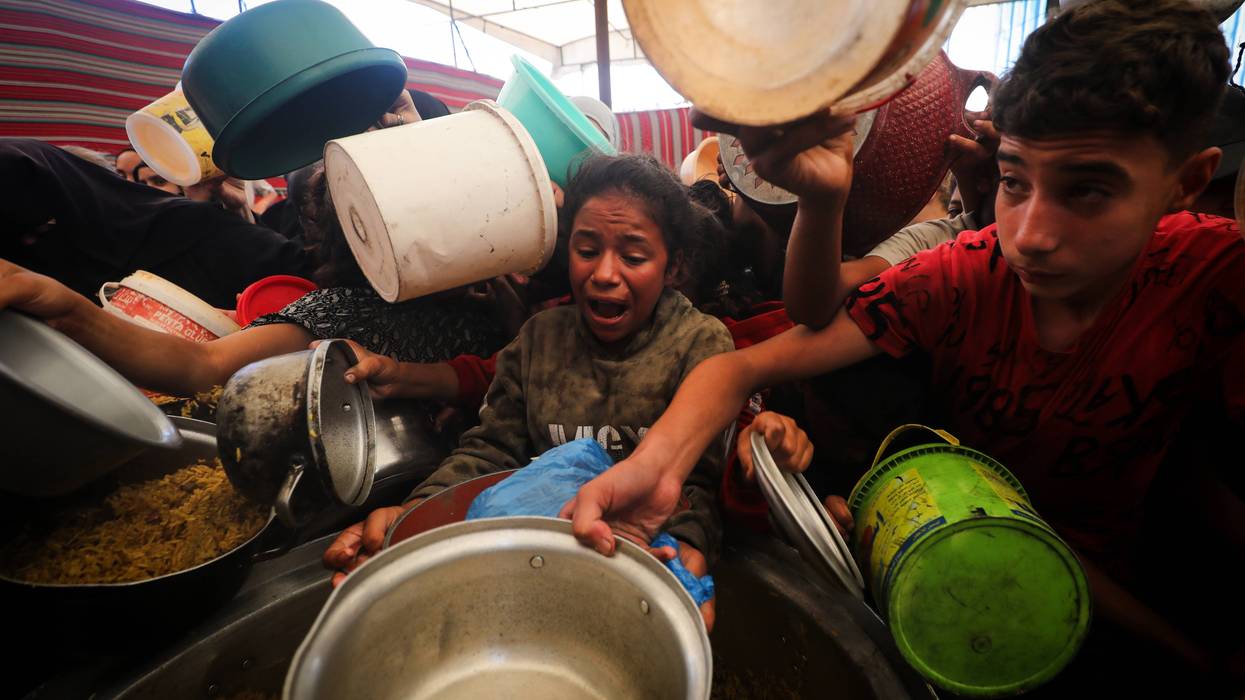
The United Nations's World Food Program announced on Monday that funding shortages were forcing it to significantly reduce assistance in Gaza, where it projected half a million people would lose access to food aid.

The WFP said the cuts would also mean that families still receiving assistance will only get half of the rations they previously received.

WFP has cut the number of hot meals it provides in Gaza by 40%, while reducing the value of cash assistance it provides to 75,000 families.

The agency also said that it would be reducing its operations in the West Bank, where an estimated 200,000 people are projected to lose access to food assistance.

The WFP said the fiscal shortfalls came after it received "less than half as much funding for its Palestine operation in 2026 as in previous years," adding that it needs $450 million to maintain its critical operations in the two Palestinian territories over the next six months.

"As winter approaches," WFP said, "additional resources are urgently needed to sustain emergency food assistance, provide critical engineering support and prevent malnutrition among young children and pregnant and breastfeeding women."

Shaun Hughes, WFP's representative and country director for Palestine, told The Guardian that the cuts were coming after the program had made steady progress in reducing hunger in Gaza, while emphasizing that "these are very fragile gains, easily reversed, and the situation is still brutal."

"We need to invest in recovery," Hughes added. "This humanitarian operation isn’t affordable or sustainable in the long term. Ultimately that’s also what everyone in Gaza is telling us. They really don’t want to be reliant on these handouts, don’t want to stand in the hot meals queue every day. They want to have some chance of stability and recovery."

Some Palestinians who spoke with BBC on Monday expressed horror at news of the cuts, which come as Gaza is still under attack by Israeli forces.

Mervat al-Satari, a displaced Palestinian mother, told BBC that the cuts were "a disaster" and asked "how will we provide for the little ones?"

Palestinian mother Dalal al-Dahdouh, who is living in the ruins of her home in Gaza City, told BBC that WFP rations were already insufficient before the cuts took effect.

"In the past, thank God, we had our own home and a wonderful life," al-Dahdouh said. "We had fresh vegetables, proper sanitation facilities, and our own land. Now we live entirely on aid, including WFP vouchers."

SEE ALL