

Given an array coins[], where each element represents a coin of a different denomination, and a target value sum. You have an unlimited supply of each coin type.
Find the minimum number of coins needed to obtain the target sum. If it is not possible to form the sum using the given coins, return -1.
Examples:
Input: coins[] = [25, 10, 5], sum = 30
Output: 2
Explanation: Minimum 2 coins needed, 25 and 5.Input: coins[] = [9, 6, 5, 1], sum = 19
Output: 3
Explanation: 19 = 9 + 9 + 1.Input: coins[] = [5, 1], sum = 0
Output: 0
Explanation: For 0 sum, we do not need a coin.Input: coins[] = [4, 6, 2], sum = 5
Output: -1
Explanation: Not possible to make the given sum.

Table of Content
[Naive Approach] Recursion – O(n ^ sum) Time and O(sum) Space
This problem is a variation of the problem Coin Change Problem. Here instead of finding the total number of possible solutions, we need to find the solution with the minimum number of coins.
The idea is to try each coin denomination in the coins[] array. Starting from the target sum, for each coin coins[i], we can either include it or exclude it.
- If we include it, we subtract its value from sum and recursively try to make the remaining amount with the same coin denominations.
- If we exclude it, we move to the next coin in the list.
Mathematically the recurrence relation will look like the following:
minCoins(i, sum, coins) = min(1 + minCoins(i, sum-coins[i], coins), minCoins(i+1, sum, coins))
Base cases:
- minCoins(i, sum, coins) = 0, if sum = 0.
- minCoins(i, sum, coins) = INTEGER MAX, if sum < 0 or i == size of coins.
#include <bits/stdc++.h>
using namespace std;

int minCoinsRecur(int i, int sum, vector<int> &coins)
{
    // base case
    if (sum == 0)
        return 0;
    if (sum < 0 || i == coins.size())
        return INT_MAX;

    int take = INT_MAX;

    // take a coin only if its value
    // is greater than 0.
    if (coins[i] > 0)
    {
        take = minCoinsRecur(i, sum - coins[i], coins);
        if (take != INT_MAX)
            take++;
    }

    // not take the coin
    int noTake = minCoinsRecur(i + 1, sum, coins);

    return min(take, noTake);
}

int minCoins(vector<int> &coins, int sum)
{
    int res = minCoinsRecur(0, sum, coins);
    return res != INT_MAX ? res : -1;
}

int main()
{
    vector<int> coins = {9, 6, 5, 1};
    int sum = 19;
    cout << minCoins(coins, sum);
    return 0;
}
import java.util.Arrays;

class GFG {
    static int minCoinsRecur(int i, int sum, int[] coins)
    {
        // base case
        if (sum == 0)
            return 0;
        if (sum < 0 || i == coins.length)
            return Integer.MAX_VALUE;

        int take = Integer.MAX_VALUE;

        // take a coin only if its value
        // is greater than 0.
        if (coins[i] > 0) {
            take = minCoinsRecur(i, sum - coins[i], coins);
            if (take != Integer.MAX_VALUE)
                take++;
        }
        // not taking the coins
        int noTake = minCoinsRecur(i + 1, sum, coins);

        return Math.min(take, noTake);
    }

    static int minCoins(int[] coins, int sum)
    {
        int ans = minCoinsRecur(0, sum, coins);
        return ans != Integer.MAX_VALUE ? ans : -1;
    }

    public static void main(String[] args)
    {
        int[] coins = { 9, 6, 5, 1 };
        int sum = 19;
        System.out.println(minCoins(coins, sum));
    }
}
def minCoinsRecur(i, sum, coins):

    # base case
    if sum == 0:
        return 0
    if sum < 0 or i == len(coins):
        return float('inf')

    take = float('inf')

    # take a coin only if its value
    # is greater than 0.
    if coins[i] > 0:
        take = minCoinsRecur(i, sum - coins[i], coins)
        if take != float('inf'):
            take += 1
    # not taking the coin
    noTake = minCoinsRecur(i + 1, sum, coins)

    return min(take, noTake)


def minCoins(coins, sum):
    ans = minCoinsRecur(0, sum, coins)
    return ans if ans != float('inf') else -1


# Driver Code
if __name__ == "__main__":
    coins = [9, 6, 5, 1]
    sum = 19
    print(minCoins(coins, sum))
using System;

class GFG {
    static int minCoinsRecur(int i, int sum, int[] coins)
    {
        // base case
        if (sum == 0)
            return 0;
        if (sum < 0 || i == coins.Length)
            return int.MaxValue;

        int take = int.MaxValue;

        // take a coin only if its value
        // is greater than 0.
        if (coins[i] > 0) {
            take = minCoinsRecur(i, sum - coins[i], coins);
            if (take != int.MaxValue)
                take++;
        }
        // not taking the coin
        int noTake = minCoinsRecur(i + 1, sum, coins);

        return Math.Min(take, noTake);
    }

    static int minCoins(int[] coins, int sum)
    {
        int ans = minCoinsRecur(0, sum, coins);
        return ans != int.MaxValue ? ans : -1;
    }

    static void Main(string[] args)
    {
        int[] coins = { 9, 6, 5, 1 };
        int sum = 19;
        Console.WriteLine(minCoins(coins, sum));
    }
}
function minCoinsRecur(i, sum, coins)
{
    // base case
    if (sum === 0)
        return 0;
    if (sum < 0 || i === coins.length)
        return Number.MAX_VALUE;

    let take = Number.MAX_VALUE;

    // take a coin only if its value
    // is greater than 0.
    if (coins[i] > 0) {
        take = minCoinsRecur(i, sum - coins[i], coins);
        if (take !== Number.MAX_VALUE)
            take++;
    }
    // not taking the coin
    let noTake = minCoinsRecur(i + 1, sum, coins);

    return Math.min(take, noTake);
}

function minCoins(coins, sum)
{
    let ans = minCoinsRecur(0, sum, coins);
    return ans !== Number.MAX_VALUE ? ans : -1;
}

// Driver code
const coins = [ 9, 6, 5, 1 ];
const sum = 19;
console.log(minCoins(coins, sum));
Output
3
[Better Approach - 1] Memoization - O(n * sum) Time and O(n * sum) Space
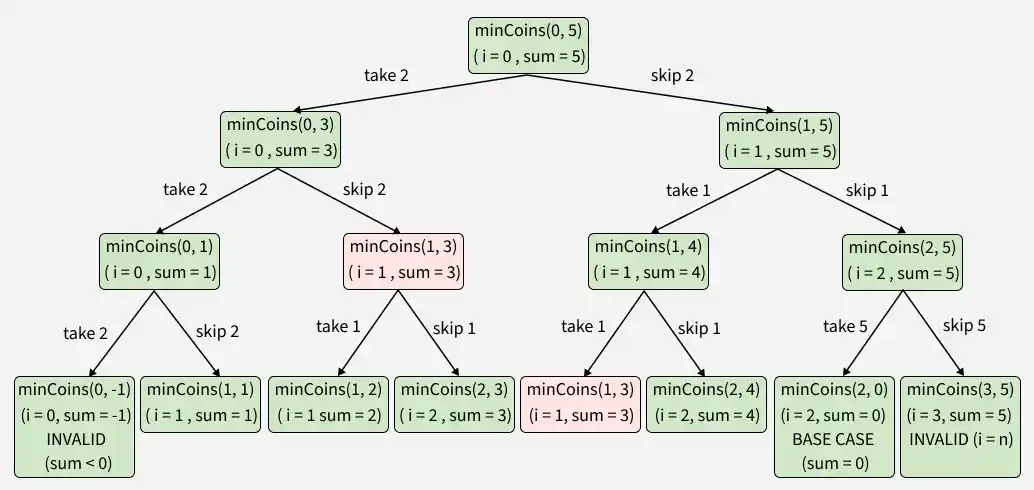
The idea is to use memoization because the recursive solution solves the same subproblems repeatedly as shown in the below diagram.
We store the results of each subproblem (i, sum, coins) in a memo table so that repeated calls can reuse the previously computed results when they will be called again and again.
Let's understand with the help of an example for better understanding: coins[] = {2, 1, 5}, sum = 5
#include <bits/stdc++.h>
using namespace std;

int minCoinsRecur(int i, int sum, vector<int> &coins, vector<vector<int>> &memo)
{
    // base case
    if (sum == 0)
        return 0;

    if (sum < 0 || i == coins.size())
        return INT_MAX;

    if (memo[i][sum] != -1)
        return memo[i][sum];

    int take = INT_MAX;

    // take a coin only if its value
    // is greater than 0.
    if (coins[i] > 0)
    {
        take = minCoinsRecur(i, sum - coins[i], coins, memo);
        if (take != INT_MAX)
            take++;
    }

    // not take the coins
    int noTake = minCoinsRecur(i + 1, sum, coins, memo);

    return memo[i][sum] = min(take, noTake);
}

int minCoins(vector<int> &coins, int sum)
{
    vector<vector<int>> memo(coins.size(), vector<int>(sum + 1, -1));

    int res = minCoinsRecur(0, sum, coins, memo);

    return res != INT_MAX ? res : -1;
}

int main()
{
    vector<int> coins = {9, 6, 5, 1};
    int sum = 19;
    cout << minCoins(coins, sum);
    return 0;
}
import java.util.Arrays;

class GFG {
    static int minCoinsRecur(int i, int sum, int[] coins,
                             int[][] memo)
    {
        // base case
        if (sum == 0)
            return 0;

        if (sum < 0 || i == coins.length)
            return Integer.MAX_VALUE;

        if (memo[i][sum] != -1)
            return memo[i][sum];

        int take = Integer.MAX_VALUE;

        // take a coin only if its value
        // is greater than 0.
        if (coins[i] > 0) {
            take = minCoinsRecur(i, sum - coins[i], coins,
                                 memo);
            if (take != Integer.MAX_VALUE)
                take++;
        }
        // not take the coin
        int noTake = minCoinsRecur(i + 1, sum, coins, memo);

        return memo[i][sum] = Math.min(take, noTake);
    }

    static int minCoins(int[] coins, int sum)
    {
        int[][] memo = new int[coins.length][sum + 1];

        for (int[] row : memo)
            Arrays.fill(row, -1);

        int ans = minCoinsRecur(0, sum, coins, memo);

        return ans != Integer.MAX_VALUE ? ans : -1;
    }

    public static void main(String[] args)
    {
        int[] coins = { 9, 6, 5, 1 };
        int sum = 19;
        System.out.println(minCoins(coins, sum));
    }
}
def minCoinsRecur(i, sum, coins, memo):

    # base case
    if sum == 0:
        return 0

    if sum < 0 or i == len(coins):
        return float('inf')

    if memo[i][sum] != -1:
        return memo[i][sum]

    take = float('inf')

    # take a coin only if its value
    # is greater than 0.
    if coins[i] > 0:
        take = minCoinsRecur(i, sum - coins[i], coins, memo)
        if take != float('inf'):
            take += 1

    # not take the coins
    noTake = minCoinsRecur(i + 1, sum, coins, memo)

    memo[i][sum] = min(take, noTake)
    return memo[i][sum]


def minCoins(coins, sum):
    memo = [[-1] * (sum + 1) for _ in range(len(coins))]

    ans = minCoinsRecur(0, sum, coins, memo)

    return ans if ans != float('inf') else -1


# Driver Code
if __name__ == "__main__":
    coins = [9, 6, 5, 1]
    sum = 19
    print(minCoins(coins, sum))
using System;

class GFG {
    static int minCoinsRecur(int i, int sum, int[] coins,
                             int[, ] memo)
    {
        // base case
        if (sum == 0)
            return 0;

        if (sum < 0 || i == coins.Length)
            return int.MaxValue;

        if (memo[i, sum] != -1)
            return memo[i, sum];

        int take = int.MaxValue;

        // take a coin only if its value
        // is greater than 0.
        if (coins[i] > 0) {
            take = minCoinsRecur(i, sum - coins[i], coins,
                                 memo);
            if (take != int.MaxValue)
                take++;
        }

        // not take the coins
        int noTake = minCoinsRecur(i + 1, sum, coins, memo);

        memo[i, sum] = Math.Min(take, noTake);
        return memo[i, sum];
    }

    static int minCoins(int[] coins, int sum)
    {
        int[, ] memo = new int[coins.Length, sum + 1];

        for (int i = 0; i < coins.Length; i++)
            for (int j = 0; j <= sum; j++)
                memo[i, j] = -1;

        int ans = minCoinsRecur(0, sum, coins, memo);

        return ans != int.MaxValue ? ans : -1;
    }

    static void Main(string[] args)
    {
        int[] coins = { 9, 6, 5, 1 };
        int sum = 19;
        Console.WriteLine(minCoins(coins, sum));
    }
}
function minCoinsRecur(i, sum, coins, memo)
{
    // base case
    if (sum === 0)
        return 0;

    if (sum < 0 || i === coins.length)
        return Number.MAX_VALUE;

    if (memo[i][sum] !== -1)
        return memo[i][sum];

    let take = Number.MAX_VALUE;

    // take a coin only if its value
    // is greater than 0.
    if (coins[i] > 0) {
        take
            = minCoinsRecur(i, sum - coins[i], coins, memo);
        if (take !== Number.MAX_VALUE)
            take++;
    }
    // not take the coin
    let noTake = minCoinsRecur(i + 1, sum, coins, memo);

    memo[i][sum] = Math.min(take, noTake);
    return memo[i][sum];
}

function minCoins(coins, sum)
{
    const memo = Array.from({length : coins.length},
                            () => Array(sum + 1).fill(-1));

    const ans = minCoinsRecur(0, sum, coins, memo);

    return ans !== Number.MAX_VALUE ? ans : -1;
}


// Driver code
const coins = [ 9, 6, 5, 1 ];
const sum = 19;
console.log(minCoins(coins, sum));
Output
3
[Better Approach - 2] Tabulation - O(n * sum) Time and O(n * sum) Space
The idea is to fill the DP table based on previous values. For each coin, we either include it or exclude it to compute the minimum number of coins needed for each sum.
The table is filled in an iterative manner from i = n-1 to i = 0 and for each sum from 1 to sum using the following relationship.
- if (sum-coins[i]) is greater than 0, then dp[i][sum] = min(1+dp[i][sum-coins[i]], dp[i+1][sum])
- else dp[i][sum] = dp[i+1][sum].
#include <bits/stdc++.h>
using namespace std;

int minCoins(vector<int> &coins, int sum)
{
    vector<vector<int>> dp(coins.size(), vector<int>(sum + 1, 0));

    for (int i = coins.size() - 1; i >= 0; i--)
    {
        for (int j = 1; j <= sum; j++)
        {
            dp[i][j] = INT_MAX;
            int take = INT_MAX, noTake = INT_MAX;

            // If we take coins[i] coin
            if (j - coins[i] >= 0)
            {
                take = dp[i][j - coins[i]];
                if (take != INT_MAX)
                    take++;
            }

            if (i + 1 < coins.size())
                // not take the coin
                noTake = dp[i + 1][j];

            dp[i][j] = min(take, noTake);
        }
    }

    if (dp[0][sum] != INT_MAX)
        return dp[0][sum];
    return -1;
}

int main()
{
    vector<int> coins = {9, 6, 5, 1};
    int sum = 19;
    cout << minCoins(coins, sum);
    return 0;
}
import java.util.Arrays;

class GFG {
    static int minCoins(int[] coins, int sum)
    {
        int[][] dp = new int[coins.length][sum + 1];

        for (int i = coins.length - 1; i >= 0; i--) {
            for (int j = 1; j <= sum; j++) {
                dp[i][j] = Integer.MAX_VALUE;
                int take = Integer.MAX_VALUE,
                    noTake = Integer.MAX_VALUE;

                // If we take coins[i] coin
                if (j - coins[i] >= 0) {
                    take = dp[i][j - coins[i]];
                    if (take != Integer.MAX_VALUE)
                        take++;
                }

                // not take the coin
                if (i + 1 < coins.length)
                    noTake = dp[i + 1][j];

                dp[i][j] = Math.min(take, noTake);
            }
        }

        if (dp[0][sum] != Integer.MAX_VALUE)
            return dp[0][sum];
        return -1;
    }

    public static void main(String[] args)
    {
        int[] coins = { 9, 6, 5, 1 };
        int sum = 19;
        System.out.println(minCoins(coins, sum));
    }
}
def minCoins(coins, sum):
    dp = [[0] * (sum + 1) for _ in range(len(coins))]

    for i in range(len(coins) - 1, -1, -1):
        for j in range(1, sum + 1):
            dp[i][j] = float('inf')
            take = float('inf')
            noTake = float('inf')

            # If we take coins[i] coin
            if j - coins[i] >= 0:
                take = dp[i][j - coins[i]]
                if take != float('inf'):
                    take += 1

            if i + 1 < len(coins):
                # not take the coins
                noTake = dp[i + 1][j]

            dp[i][j] = min(take, noTake)

    if dp[0][sum] != float('inf'):
        return dp[0][sum]
    return -1


# Driver Code
if __name__ == "__main__":
    coins = [9, 6, 5, 1]
    sum = 19
    print(minCoins(coins, sum))
using System;

class GFG {
    static int minCoins(int[] coins, int sum)
    {
        int[, ] dp = new int[coins.Length, sum + 1];

        for (int i = coins.Length - 1; i >= 0; i--) {
            for (int j = 1; j <= sum; j++) {
                dp[i, j] = int.MaxValue;
                int take = int.MaxValue, noTake
                                         = int.MaxValue;

                // If we take coins[i] coin
                if (j - coins[i] >= 0) {
                    take = dp[i, j - coins[i]];
                    if (take != int.MaxValue)
                        take++;
                }

                if (i + 1 < coins.Length)
                    // not take the coins
                    noTake = dp[i + 1, j];

                dp[i, j] = Math.Min(take, noTake);
            }
        }

        if (dp[0, sum] != int.MaxValue)
            return dp[0, sum];
        return -1;
    }

    static void Main(string[] args)
    {
        int[] coins = { 9, 6, 5, 1 };
        int sum = 19;
        Console.WriteLine(minCoins(coins, sum));
    }
}
function minCoins(coins, sum)
{
    let dp = Array.from({length : coins.length},
                        () => Array(sum + 1).fill(0));

    for (let i = coins.length - 1; i >= 0; i--) {
        for (let j = 1; j <= sum; j++) {
            dp[i][j] = Number.MAX_VALUE;
            let take = Number.MAX_VALUE,
                noTake = Number.MAX_VALUE;

            // If we take coins[i] coin
            if (j - coins[i] >= 0) {
                take = dp[i][j - coins[i]];
                if (take !== Number.MAX_VALUE)
                    take++;
            }

            if (i + 1 < coins.length)
                // not take the coins
                noTake = dp[i + 1][j];

            dp[i][j] = Math.min(take, noTake);
        }
    }

    if (dp[0][sum] !== Number.MAX_VALUE)
        return dp[0][sum];
    return -1;
}

// Driver code
const coins = [ 9, 6, 5, 1 ];
const sum = 19;
console.log(minCoins(coins, sum));
Output
3
[Expected Approach] Space Optimized DP – O(n * sum) Time and O(sum) Space
In previous approach of dynamic programming we have derive the relation between states as given below:
- if (sum-coins[i]) is greater than 0, then dp[i][sum] = min(1+dp[i][sum-coins[i]], dp[i+1][sum])
- else dp[i][sum] = dp[i+1][sum].
If we observe that for calculating current dp[i][sum] state we only need previous row dp[i-1][sum] or current row dp[i][sum-coins[i]].
There is no need to store all the previous states just one previous state is used to compute result.
#include <bits/stdc++.h>
using namespace std;

// Function to find the minimum number of
// coins needed to make the given sum
int minCoins(vector<int> &coins, int sum)
{
    // Create a DP array to store the minimum coins
    // for each value up to sum
    vector<int> dp(sum + 1, INT_MAX);

    // Base case: 0 coins are needed to make sum 0
    dp[0] = 0;

    // Iterate over each coin in the coins array
    for (int i = coins.size() - 1; i >= 0; i--)
    {
        // Iterate through all sums from 1 to the given sum
        for (int j = 1; j <= sum; j++)
        {
            // Initialize take and noTake variables
            int take = INT_MAX, noTake = INT_MAX;

            // Check if we can take the current coin
            if (j - coins[i] >= 0 && coins[i] > 0)
            {
                // Get the minimum coins needed for
                // the remaining sum
                take = dp[j - coins[i]];

                // Increment take if it's a valid option
                if (take != INT_MAX)
                    take++;
            }

            // If we have more coins available,
            // consider not taking the current coin

            if (i + 1 < coins.size())
                // Get the minimum coins needed without
                // taking the current coi
                noTake = dp[j];

            // Update the DP array with the minimum of
            // taking or not taking the coin
            dp[j] = min(take, noTake);
        }
    }

    // found a solution, return the minimum
    // coins needed, otherwise return -1
    if (dp[sum] != INT_MAX)
        return dp[sum];
    return -1;
}

int main()
{
    vector<int> coins = {9, 6, 5, 1};
    int sum = 19;
    cout << minCoins(coins, sum);
    return 0;
}
import java.util.Arrays;

class GFG {

    // Function to find the minimum number
    // of coins required to make a given sum
    static int minCoins(int[] coins, int sum)
    {
        // Array to store the minimum coins needed for
        // each value up to sum
        int[] dp = new int[sum + 1];

        // Initialize the dp array with a large value
        // (infinity)
        Arrays.fill(dp, Integer.MAX_VALUE);

        // Base case: 0 coins are needed to make the sum of
        // 0
        dp[0] = 0;

        // Iterate through each coin in reverse order
        for (int i = coins.length - 1; i >= 0; i--) {

            // Iterate through all sums from 1 to the target
            // sum
            for (int j = 1; j <= sum; j++) {

                // Initialize variables to track taking
                // or not taking the coin
                int take = Integer.MAX_VALUE,
                    noTake = Integer.MAX_VALUE;

                // If we can take the current coin
                if (j - coins[i] >= 0 && coins[i] > 0) {
                    take = dp[j - coins[i]];

                    // If taking the coin is possible,
                    // increment the count
                    if (take != Integer.MAX_VALUE)
                        take++;
                }

                // If there are more coins available,
                // consider not taking the current coin
                if (i + 1 < coins.length)
                    noTake = dp[j];

                // Store the minimum of taking or
                // not taking the coin
                dp[j] = Math.min(take, noTake);
            }
        }

        // Return the minimum coins needed for
        // the target sum, or -1 if not possible
        return dp[sum] != Integer.MAX_VALUE ? dp[sum] : -1;
    }

    public static void main(String[] args)
    {
        int[] coins = { 9, 6, 5, 1 };
        int sum = 19;
        System.out.println(minCoins(coins, sum));
    }
}
def minCoins(coins, sum):

    # Initialize a list to store the minimum
    # number of coins for each amount
    dp = [float('inf')] * (sum + 1)

    # Base case: 0 coins are needed to make the sum of 0
    dp[0] = 0

    # Iterate over each coin in reverse order
    for i in range(len(coins) - 1, -1, -1):

        # Iterate through all amounts from 1 to sum
        for j in range(1, sum + 1):

            #  take variable for the current coin
            take = float('inf')

            #  noTake variable for the current amount
            noTake = float('inf')

            # If we can take the current coin
            if j - coins[i] >= 0 and coins[i] > 0:

                # Get the minimum coins needed
                # for the remaining amount
                take = dp[j - coins[i]]

                # Increment the count if it's a valid take
                if take != float('inf'):
                    take += 1

            # If there are coins left to consider
            if i + 1 < len(coins):

                # Get the minimum coins needed without
                # taking the current coin
                noTake = dp[j]

            # Store the minimum of taking or not
            # taking the current coin
            dp[j] = min(take, noTake)

    # Return the result for the given sum,
    # or -1 if it's not possible
    return dp[sum] if dp[sum] != float('inf') else -1


# Driver Code
if __name__ == "__main__":
    coins = [9, 6, 5, 1]
    sum = 19
    print(minCoins(coins, sum))
using System;
using System.Linq;

class GFG {

    // Function to find the minimum number of
    // coins required to make a given sum
    static int minCoins(int[] coins, int sum)
    {
        // Create a DP array initialized to maximum value
        int[] dp = Enumerable.Repeat(int.MaxValue, sum + 1)
                       .ToArray();

        dp[0] = 0;

        // Iterate through each coin
        for (int i = coins.Length - 1; i >= 0; i--) {

            // Iterate through all sums from 1 to the target
            // sum
            for (int j = 1; j <= sum; j++) {
                int take = int.MaxValue;
                int noTake = int.MaxValue;

                // If we take coins[i] coin
                if (j - coins[i] >= 0 && coins[i] > 0) {
                    // Get the value if we take this coin
                    take = dp[j - coins[i]];

                    // Increment the coin count
                    if (take != int.MaxValue)
                        take++;
                }

                // Get the value if we do not take the coin
                if (i + 1 < coins.Length)
                    noTake = dp[j];

                // Store the minimum of taking or not taking
                // the coin
                dp[j] = Math.Min(take, noTake);
            }
        }

        // Return the result
        return dp[sum] != int.MaxValue ? dp[sum] : -1;
    }

    // Main function to test the minCoins function
    public static void Main()
    {
        int[] coins = { 9, 6, 5, 1 };
        int sum = 19;
        Console.WriteLine(minCoins(coins, sum));
    }
}
function minCoins(coins, sum)
{
    // Initialize an array to store the
    // minimum coins needed for each amount
    let dp = new Array(sum + 1).fill(Infinity);
    dp[0] = 0;

    // Iterate through each coin in the coins array
    for (let i = coins.length - 1; i >= 0; i--) {

        // Iterate through all sums from 1
        // to the target sum
        for (let j = 1; j <= sum; j++) {

            // Initialize take and noTake variables
            let take = Infinity, noTake = Infinity;

            // If we can take the current coin
            if (j - coins[i] >= 0 && coins[i] > 0) {

                // Get the minimum coins for the remaining
                // sum
                take = dp[j - coins[i]];

                // Increment the coins count if valid
                if (take !== Infinity)
                    take++;
            }
            // If not taking the current coin,
            // just take the previous value
            if (i + 1 < coins.length)
                noTake = dp[j];

            // Store the minimum of taking or not taking the
            // coin
            dp[j] = Math.min(take, noTake);
        }
    }
    // Return the result for the target sum,
    // or -1 if it's not possible
    return dp[sum] !== Infinity ? dp[sum] : -1;
}

// Driver code
let coins = [ 9, 6, 5, 1 ];
let sum = 19;
console.log(minCoins(coins, sum));
Output
3
