

Ethical hacking is the process of testing computer systems, networks and applications with proper authorization to identify security vulnerabilities before cybercriminals exploit them. Ethical hackers, also known as white-hat hackers, help organizations improve cybersecurity, protect sensitive data and strengthen digital infrastructure.
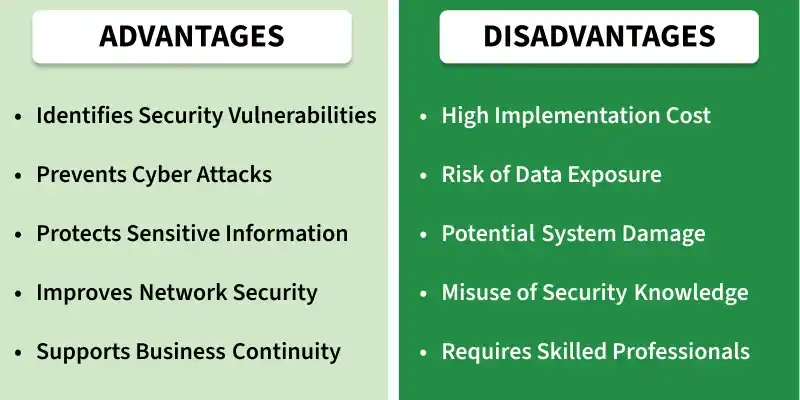
Advantages of Ethical Hacking
Ethical hacking provides several benefits to organizations by improving security and reducing cyber risks.
1. Identifies Security Vulnerabilities
Ethical hacking helps organizations discover weaknesses in systems, networks and applications before attackers can exploit them.
- Detects hidden vulnerabilities.
- Improves system protection.
- Reduces security risks.
2. Prevents Cyber Attacks
By identifying loopholes early, ethical hacking helps prevent cyberattacks such as malware infections, ransomware, phishing and unauthorized access.
- Minimizes attack chances.
- Strengthens cyber defense.
- Protects organizational assets.
3. Protects Sensitive Information
Ethical hacking secures confidential business data, customer information and financial records from data breaches.
- Enhances data privacy.
- Prevents information theft.
- Secures critical databases.
4. Improves Network Security
Ethical hackers test firewalls, servers and communication systems to improve overall network security.
- Detects network weaknesses.
- Improves firewall configuration.
- Enhances secure communication.
5. Supports Business Continuity
Strong cybersecurity reduces downtime caused by cyber incidents and helps organizations maintain uninterrupted operations.
- Reduces operational disruptions.
- Improves system reliability.
- Maintains business productivity.
6. Builds Customer Trust
Organizations with strong cybersecurity practices gain customer confidence and improve their reputation.
- Increases customer satisfaction
- Enhances brand reputation
- Builds trust in online services
Disadvantages of Ethical Hacking
Despite its benefits, ethical hacking also has certain limitations and risks.
1. High Implementation Cost
Hiring professional ethical hackers and conducting security assessments can be expensive for some organizations.
- Requires financial investment.
- Increases cybersecurity expenses.
- Costly for small businesses.
2. Risk of Data Exposure
Sensitive information may become exposed during the testing process if proper precautions are not followed.
- Possible data leakage.
- Risk of confidential information exposure.
- Privacy concerns.
3. Potential System Damage
Improper testing methods may affect system performance or accidentally damage files and applications.
- Temporary system disruption.
- Reduced application performance.
- Risk of accidental data corruption.
4. Misuse of Security Knowledge
Some individuals may misuse hacking knowledge gained during ethical hacking activities for malicious purposes.
- Insider security threats.
- Unauthorized use of information.
- Ethical concerns.
5. Requires Skilled Professionals
Ethical hacking requires highly trained cybersecurity experts with strong technical knowledge.
- Limited availability of experts.
- Requires continuous training.
- Complex security testing process.
