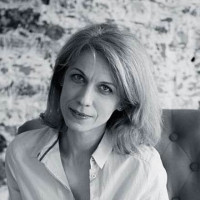

For Nikoloz Rachveli, music has long transcended the concert stage. The Georgian conductor, pianist and composer, who has worked with musicians and orchestras across the world, made supporting Ukrainians part of his artistic and civic commitment after Russia launched its full-scale invasion.
On Feb. 24, 2022, the rehearsal hall of the Georgian Philharmonic Orchestra in Tbilisi spontaneously became a gathering place for a massive show of solidarity with Ukraine. In late May 2022, Rachveli traveled to Kyiv with singer Nino Katamadze and performed in the metro, on a stage between the tracks, for Ukrainians living through the war.
JOIN US ON TELEGRAM
Follow our coverage of the war on the @Kyivpost_official.
Since then, he has repeatedly returned to Ukraine, performing in Kyiv, Lviv, Odesa, Kharkiv, Poltava, Dnipro, Ivano-Frankivsk, Uzhhorod, Chernivtsi, Zhytomyr, Lutsk and Rivne. He has worked with Ukrainian musicians while introducing audiences back home in Georgia to Ukrainian classical music.
Today, Rachveli speaks about Ukraine as a country to which he feels connected not only through music but also through a profound sense of personal responsibility.
Kyiv Post: Feb. 24, 2022, marked the start of Russia’s full-scale invasion. In Georgia, musicians rallied around you and Nino Katamadze. How did that response begin?
Nikoloz Rachveli: On Feb. 23, we had a rehearsal with the Georgian Philharmonic Orchestra. There was a sense of tension; everyone was expecting something terrible to happen. One of the orchestra musicians suggested adding a piece by a Ukrainian composer to the program. On Feb. 24, I was planning to listen to Ukrainian works and choose one.

There Will be no Breakthrough in Peace Talks, - Stefan Korshak
But early that morning, we woke up to the horrifying news. Everyone in the orchestra’s group chat was writing that something terrible was happening. We decided to gather in the rehearsal hall, if only to be together. I posted on Facebook that the doors were open to everyone.
By 10 a.m., musicians from different Georgian orchestras were already on stage. Around 800 to 900 people arrived, carrying flags and banners and bringing yellow-and-blue flowers.
We went live. Nino Katamadze came, along with other singers, soloists, opposition politicians and television crews. The rehearsal hall became the epicenter of support for Ukraine in Georgia.
We reached out to musical communities around the world and began performing the national anthems of Ukraine and Georgia. Nino sang “Chornobryvtsi” (“Black-Eyed Susans”), and we concluded with music by Giya Kancheli.
It later became clear that our gathering was the first initiative of this scale organized by an artistic community anywhere in the world. It became one of the symbols of support for Ukraine.
When did you decide that you wanted to come to Ukraine in person?
I felt that urge immediately. On the evening of Feb. 24, I was calling friends and asking what we could do. I had this impulse: “Give me a weapon. I want to fight.” The same instinct had awakened in me in 2008.
When Russia attacked Ukraine, all the unhealed wounds in Georgians opened up again. I wanted to take up arms, but my friends in the military talked me out of it.

Because music can be a weapon, too.
Exactly. I focused on charity and artistic work. In early April 2022, we organized a major televised fundraising marathon and invited artists and musicians from Ukraine, including the Lviv-based INSO-Lviv orchestra and Jamala. All Georgian television channels broadcast the event.
People could donate to the account of the Embassy of Ukraine in Georgia. Across several such initiatives, we raised around $500,000.
In late May, Sofiko Chkonia, founder of Mercedes-Benz Fashion Week Tbilisi, suggested organizing a trip to Ukraine. She brought Nino and me together, and we decided to go.
We discovered that Ukrainians and Georgians share a powerful, deeply rooted – almost genetic – longing for freedom. That is what makes our peoples spiritually related.
You and Nino Katamadze performed in the Kyiv metro at the time. It was a very special concert for all of us.
Looking back on my life, that concert was the most special, the most important and the most emotionally intense performance I had ever given, before or since.
Because of the security situation, we were offered the opportunity to perform in the metro. I remember Kyiv with almost no cars on the streets and restaurants and cafés closed. The management of the Fairmont hotel took us in, even though nobody was working there apart from one person who opened the doors for us. They brought us bread, and we made our own sandwiches.
Bono had performed at Maidan Nezalezhnosti metro station shortly before us. Later, our musical program took place there, too. I asked some dear Ukrainian friends who play string instruments to join us. That is how the Ukrainian-Georgian performance came together.
Our stage was between the tracks. The trains did not stop, but the drivers were asked to slow down. We could see people inside the carriages.
They recognized Nino, waved to us and made heart signs with their hands. We also performed for military personnel returning from the front and for field medical staff.
It was incredible. Nothing like that happens in ordinary life.
Later, we performed together in Lviv in support of Ukraine. We returned to Georgia and realized that we wanted to come back to Ukraine again. Since then, I have personally crossed the Ukrainian border 29 times and served as musical director for approximately 50 events.

How has the war changed your understanding of music?
My understanding has changed profoundly. But it is not just my attitude toward music that has changed. My attitude toward life itself and toward the people who perform music has changed, too.
Previously, the most important things for me were the concept of a concert, the composition and the performance. Now, the person comes first – the person with whom I create music or for whom I create it.
When you are in Ukraine, especially in Kyiv, rehearsing with colleagues who risk their lives every day, you come to rehearsal after a terrifying night and look around, wondering: Is everyone here today?
I remember a concert last year. There had been a massive attack before the dress rehearsal. That morning, on stage, I began quietly counting the children – we were rehearsing with the Shchedryk choir – to make sure that everyone who had been there the day before had returned.
Later, I heard the story of a little girl who refused to go to a shelter with her father because she could not leave her mother, who has a disability, alone. The entire family stayed at home.
There are so many stories like these. Today, I understand the word “life” differently.
Here, life means constant risk. You never know what might happen in an hour, or even in a minute. That is why I have learned to value every moment in an entirely different way.
What power does music have under such circumstances?
Just look at our concert – the closing event of Kyiv Music Fest 2026, titled “Let There Be Light,” on Oct. 3. In this bleak psychological state, music gave both the audience and those of us on stage an extraordinary, boundlessly positive energy.

It helps us survive, stand firm, keep hope alive for the future and stay sane. That is why I value the power of music so deeply.
Composer Giya Kancheli played a special role in your life. During a recent performance of Styx in Kyiv, you found it difficult to remain at the conductor’s podium during one of the rehearsals. What happened?
After a terrible night of shelling, I heard the Dumka choir for the first time at rehearsal. Those wonderful singers had come and were singing in my native Georgian. As I conducted, I was so overwhelmed by emotion that I lost my composure and began to cry.
The story of Styx is unique for me. When Giya Kancheli wrote the piece in 1999, he specifically added a piano part to the orchestration for me. I was 19 and in my first year at the Vienna Academy of Music. Even then, Kancheli supported me enormously and had great hopes for my future as a composer and conductor.
He insisted that orchestras invite me to perform the piano part at every premiere of Styx. So, 27 years ago, I became one of the musicians who first brought the work to life, performing it in many countries around the world.
Later, I conducted Styx myself in concert halls internationally. When you perform a piece very often, it becomes almost your own. But this time in Kyiv, I experienced every measure and every note differently. Everything felt deeper, warmer and, at the same time, more emotionally intense.
My feelings were transmitted to the orchestra musicians and the choir, and then to the audience. The performance prompted unusually prolonged applause, cries of emotion and genuine tears – on stage and in the hall alike.
You knew Giya Kancheli for many years. What was your creative friendship like?
In 2002, an idea emerged in Georgia to create a stage production based on Kancheli’s music for film and theater. I proposed new arrangements and orchestration, along with vocal, theatrical and choreographic elements.
The premiere took place at the Tbilisi Opera Theatre in 2003 and played to full houses for several consecutive days. The project introduced a new generation to Kancheli’s music. Giya often thanked me for bringing this part of his work back to life on stage and giving it a new existence.
For my career, Giya was the key person who helped me move from Georgia onto the international stage. When orchestras in other countries commissioned works from him, he recommended me to them. That is how I began conducting premieres of Kancheli’s compositions with European orchestras.
Toward the end of his life, he told me something incredibly important: When he composed music, he could already imagine it being performed under my baton, in my interpretation.
For a performer, that is the highest recognition an author of his stature can offer.

One of your main areas of work today is Ukrainian music. What are your plans in this field?
One of my main goals is to perform Ukrainian composers’ works more frequently in Georgia. At the end of November, I will conduct a concert in Tbilisi with our orchestra featuring works by Hanna Havrylets, Bohdana Frolyak, Liubava Sydorenko and other Ukrainian composers.
The Soviet Union did a great deal to ensure that almost nothing was known in Georgia about Ukrainian symphonic and chamber music. The past four and a half years have been a period of constantly discovering new Ukrainian names and compositions for me.
In Lviv, I worked with INSO-Lviv on the Genocode project, which tells the story of Ukrainian classical music through excerpts from symphonic, chamber and operatic works.
That is why I see my mission as more than allowing the war to unite us in resisting Russian imperial policy. Creativity must unite us, too.
Ukrainian audiences know and love Georgian dances and music. I want people in Georgia to know and love Ukrainian composers just as much, and to look forward to hearing their music performed. I have already organized a Ukrainian music festival in Tbilisi twice. Now I am planning a third edition.

You spend much of your time abroad. How has the political situation in Georgia affected your life and work?
Yes. The political situation in Georgia has become extremely tense. Friends of mine – artists, directors, writers and journalists – are in prison because of their active participation in protests. Among them is Paata Burchuladze, a legend of the international opera world. Unfortunately, our country is beginning to resemble Belarus under Lukashenko.
At the same time, our orchestra and concert hall remain oases of freedom, places from which free speech can still be heard, along with a handful of media outlets. But more and more musicians, including members of our orchestra, are receiving heavy fines for taking part in protests.
Democracy and Georgia’s movement toward the West have weakened considerably. Nevertheless, I still do not want to believe that members of the Georgian government are pro-Russian at heart. I think some are driven by fear of war, while others are motivated by financial interests. This part of society accounts for no more than 15 percent of our population, but unfortunately, it is the group holding the levers of power.
Still, I would like to end our conversation in a major key. We need to imagine positive scenarios. What future do you dream of for Ukraine and Georgia?
Since you mentioned the word “dream,” yes, I have one: I want Ukraine and Georgia to share a common border. (Smiles.)
It is a playful dream, but if you look deeper into history, the territories between us were once connected to both Ukraine and Georgia. Perhaps, if that happened, historical justice would be restored.
We are already neighbors and brothers in spirit. I want us to become geographical neighbors, too. (Smiles.)
Seriously, though, I dream that future generations of Ukrainians and Georgians will live peacefully and without fear, will not be afraid of their neighbors and will not have to pass this struggle on to their children.
I very much want Russia to break apart as an empire and for a democratic society to emerge there afterward. Geographically, we are neighbors, and there is no escaping that reality. That is why it is important for Russia to change not only its politics but also its mindset – to acknowledge its crimes and undergo a process of moral cleansing.
After World War II, German society underwent serious work in this regard. A country that committed the Holocaust has become a model state in protecting European values and now supports Ukraine so strongly.
Of course, it is difficult for me to imagine Russia accomplishing this. But first and foremost, it must suffer a crushing defeat. Only then will its society have a chance at moral salvation.
Ukraine had already won when the enemy failed to capture Kyiv – of course, at the cost of countless lives and thanks to its extraordinary heroes. Knowing the character of the Ukrainian people, I believe in victory to the very end, a victory that will bring Ukraine a bright future. And a bright future for Ukraine also means a bright future for my homeland.

Ukraine’s victory is essential to the history of humanity and the history of religions. It must show future generations that evil can be defeated by good. Otherwise, everything on which our civilization rests will lose its meaning.
Glory to Ukraine!
Glory to Georgia!
Glory to the heroes of our two countries!
You can also highlight the text and press Ctrl + Enter