Modern applications can be built using different architectural styles, with Monolithic Architecture and Microservices Architecture being two widely used approaches. A monolithic application is packaged and deployed as a single application unit, while microservices architecture divides the application into multiple independently deployable services.
- Monolithic Architecture: Combines major application components into a single deployable unit.
- Microservices Architecture: Divides the application into smaller services that focus on specific business capabilities.
Monolithic Architecture
Monolithic Architecture is a software design approach in which the major components of an application, such as the user interface, business logic, and data access layer, are packaged and deployed together as a single application.
It is commonly used for small to medium-sized applications where simpler development, deployment, and operations are important.
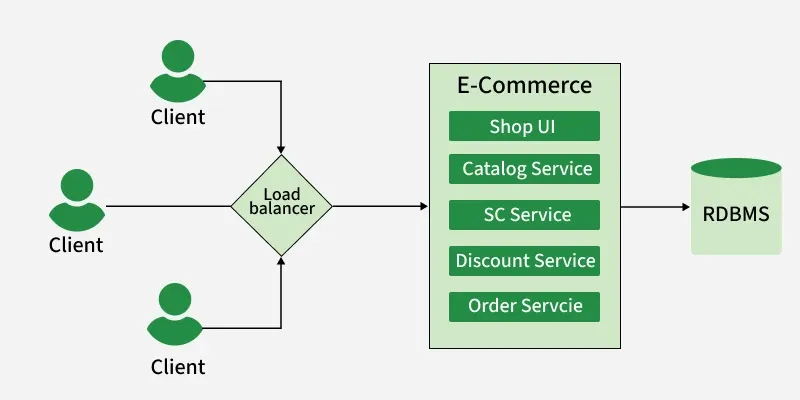
Key Characteristics
- Single Deployment Unit: The complete application is generally packaged and deployed together.
- Shared Runtime: Most application modules usually run within the same process or runtime environment.
- Direct Internal Communication: Modules can communicate through method or function calls without network-based service communication.
- Unified Application Structure: Components are managed as part of the same application, although they may still be organized into separate internal modules.
- Shared Data Access: Modules often use a common database or persistence layer.
- Whole-Application Scaling: Scaling usually involves running additional instances of the entire application rather than scaling an individual module.
Microservices Architecture
Microservices Architecture is a software design approach in which an application is divided into multiple small services, with each service typically responsible for a specific business capability.
These services communicate through APIs, messaging systems, or events and can often be developed, deployed, and scaled independently.
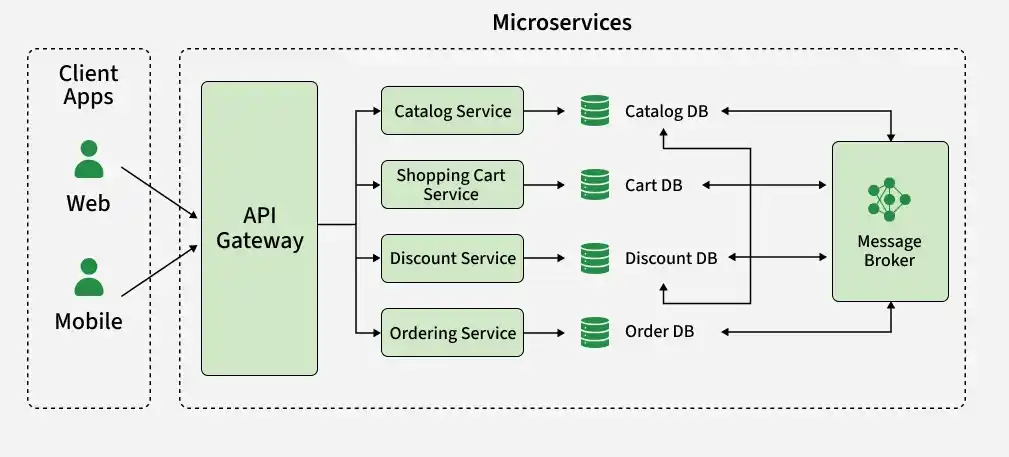
Key Characteristics
- Business-Capability Focus: Each service usually handles a specific domain or business function.
- Independent Deployment: Services can often be deployed separately, provided their contracts and dependencies remain compatible.
- Independent Scaling: Services can be scaled according to their individual workload requirements.
- Network-Based Communication: Services generally communicate through REST APIs, gRPC, messaging, or events.
- Technology Flexibility: Different services may use different programming languages, frameworks, or databases where appropriate.
- Distributed Data Ownership: Service-owned data stores are common, although not mandatory in every microservices design.
Monolithic Vs Microservices Architecture
| Aspect | Monolithic Architecture | Microservices Architecture |
|---|---|---|
| Structure | Single deployable application | Multiple independent services |
| Deployment | Entire application is deployed together | Services can be deployed independently |
| Scaling | Usually scales the whole application | Individual services can scale separately |
| Communication | Mostly in-process communication | Uses APIs or messaging between services |
| Complexity | Simpler to develop and operate initially | Higher operational and distributed-system complexity |
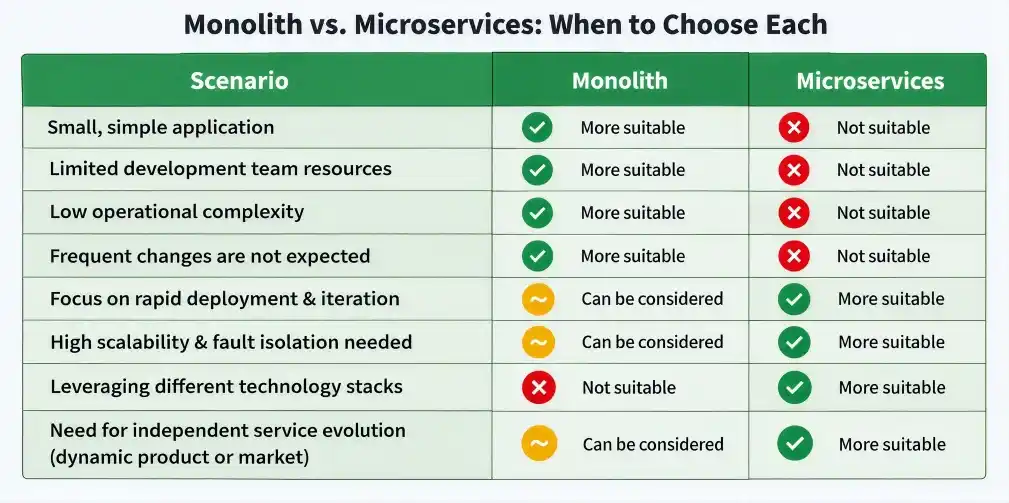
Best Scenarios for Monolithic and Microservices Architecture
The best scenarios where we can use Monolithic Architecture or Microservices Architecture are: