

High availability in system design refers to designing a system so that it remains accessible and provides its intended service with minimal downtime, including during certain component failures.
- High availability aims to reduce the frequency and duration of service interruptions.
- It commonly uses redundancy, failover, load balancing, replication, and monitoring.
Example: An e-commerce platform may run multiple application servers behind a load balancer so that traffic can be redirected to healthy instances if one server fails.
Importance of High Availability
High availability is important for systems where downtime can affect users, business operations, or critical services.
- Reduced Downtime: Keeps services accessible for a greater percentage of time.
- Business Continuity: Helps maintain important operations during component failures.
- SLA Compliance: Supports uptime targets defined in Service Level Agreements.
- User Experience: Reduces service interruptions experienced by users.
- Critical Services: Helps keep systems such as banking, healthcare, and communication platforms accessible.
Measuring High Availability
Availability is commonly measured using uptime percentage:
Availability (%) = Uptime / (Uptime + Downtime) × 100
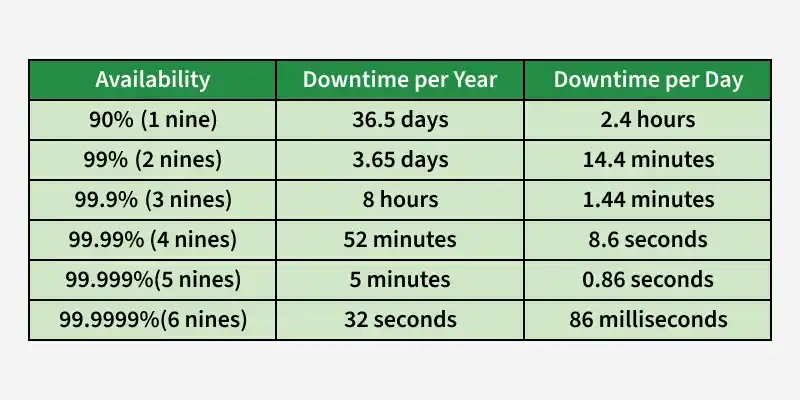
For example, a service with 99.9% availability may experience approximately 8.76 hours of downtime in a year.
Supporting Metrics
Several metrics help explain why availability increases or decreases.
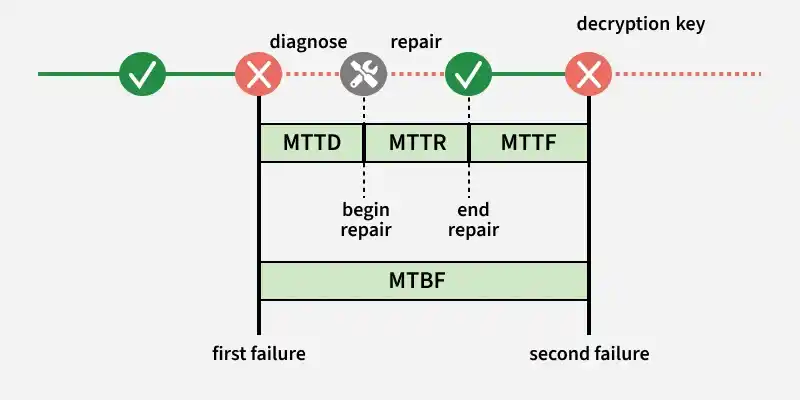
1. Mean Time Between Failures (MTBF)
MTBF measures the average operating time between failures in a repairable system.
MTBF = Total Operational Time / Number of Failures
A higher MTBF generally indicates less frequent failures.
2. Mean Time to Repair (MTTR)
MTTR measures the average time required to restore service after a failure.
MTTR = Total Repair Time / Number of Repairs
A lower MTTR usually improves availability because outages are resolved faster.
3. Mean Time to Detect (MTTD)
MTTD measures the average time required to identify that an incident has occurred. Faster detection can help reduce total outage duration.
Availability Levels
This section shows how different availability percentages translate into actual downtime in real systems.
Ways to Achieve High Availability
High availability is achieved by reducing both the likelihood and impact of failures.
- Redundancy: Maintain multiple instances of critical components.
- Load Balancing: Distribute requests across healthy instances.
- Automatic Failover: Redirect traffic or responsibilities when a component fails.
- Replication: Maintain multiple copies of important data where appropriate.
- Health Checks: Detect unhealthy application or infrastructure instances.
- Monitoring and Alerting: Identify failures, resource exhaustion, and abnormal behavior quickly.
- Capacity Planning: Ensure sufficient resources are available for expected and peak workloads.
- Disaster Recovery: Maintain recovery procedures and alternate infrastructure for major outages.
Redundancy Architectures for High Availability
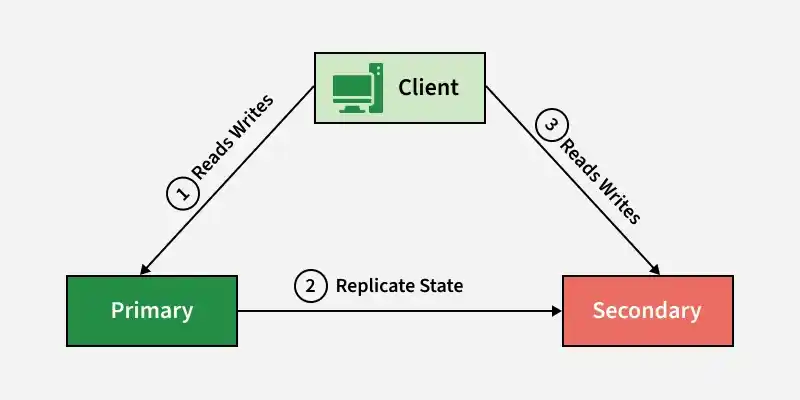
Redundancy ensures high availability by running multiple system instances so that if one fails, another can continue serving users. It is often combined with data replication to keep data copies across multiple servers for reliability.
1. Active-Passive Architecture
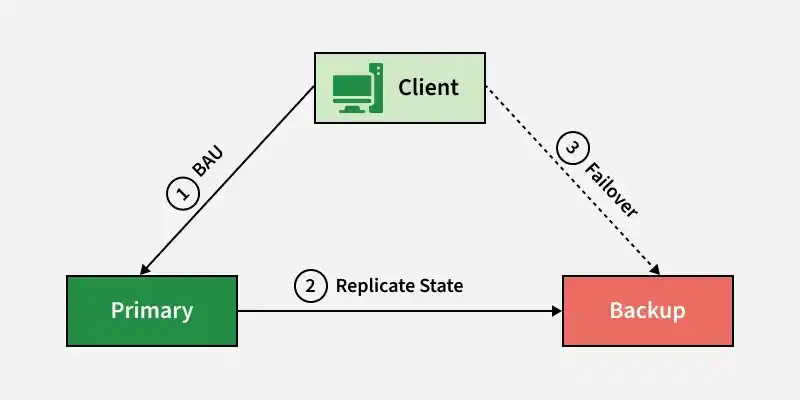
In an active-passive design, one instance actively handles production traffic while another remains available as a standby.
- The active node handles normal requests.
- The standby maintains the required state or replicated data.
- If the active node fails, the standby can take over through manual or automatic failover.
Example: A primary database with a standby replica that can be promoted after a failure.
2. Warm Standby Architecture
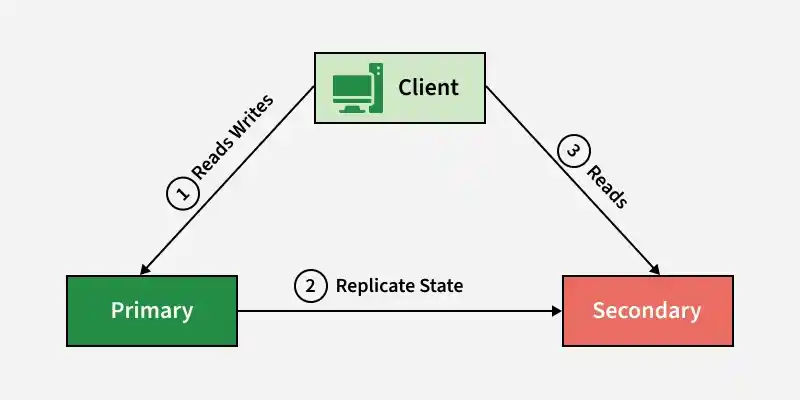
A warm standby system keeps a secondary environment running and partially ready to take over.
- The standby is operational but may run with reduced capacity.
- It receives updates or replicated state from the primary system.
- Failover is usually faster than rebuilding a replacement environment from scratch.
Example: A secondary application environment that stays synchronized and can be promoted if the primary environment becomes unavailable.
3. Active-Active Architecture
In an active-active design, multiple instances or sites simultaneously serve production traffic.
- Traffic is distributed across multiple active nodes.
- Failure of one node allows other active nodes to continue serving requests.
- Data consistency, routing, and conflict handling must be designed carefully.
Example: Multiple application servers running behind a load balancer in different availability zones.
Challenges and Trade-offs
High availability improves service continuity but introduces additional complexity.
- Higher Cost: Redundant infrastructure requires additional resources.
- Operational Complexity: Failover, monitoring, replication, and recovery require careful management.
- Data Consistency: Replicated systems may need coordination to avoid conflicting or stale data.
- Failover Risk: Incorrect failover logic can cause extended downtime or inconsistent state.
- Dependency Failures: Availability may still be limited by databases, APIs, networks, or other dependencies.
- Testing Complexity: Failure scenarios must be tested regularly to verify recovery mechanisms.
